
Induced Parkinson’s Disease mouse models – MPTP Mouse Model of Parkinson’s Disease
Rapidly evaluate the neuroprotective and neuroinflammation-targeting effects of your novel therapeutic, leveraging the MPTP-induced Parkinson’s disease mouse model
MPTP Mouse Model of Parkinson’s Disease Characteristics
The MPTP mouse model is one of the most widely used toxin-induced mouse models for Parkinson’s disease research and preclinical efficacy testing.
Degeneration of dopaminergic neurons in the substantia nigra pars compacta (SNpc) is one of the central pathological hallmarks underlying motor symptoms in Parkinson’s disease. Injecting wild-type mice with MPTP, a neurotoxin that selectively targets dopaminergic neurons of the nigrostriatal pathway, results in key pathological and behavioral phenotypes relevant to Parkinson’s disease. Following systemic administration, MPTP readily crosses the blood-brain barrier where it is metabolized it into its active toxic metabolite, MPP+. MPP+ is then selectively taken up by dopamine transporters on dopaminergic neurons, where it induces mitochondrial complex I dysfunction, oxidative stress, neuroinflammation, and ultimately dopaminergic neurodegeneration, reproducing key disease mechanisms highly relevant to Parkinson’s disease pathology.
Compared with transgenic α-synuclein mouse models, the MPTP model offers a fast induction of Parkinson’s disease-like pathology with flexible study timelines. At InnoSer, the MPTP mouse model can be used as a rapid and translationally relevant research tool for performing early-stage efficacy testing of neuroprotective compounds, anti-inflammatory therapeutics, and NLRP3 inflammasome inhibitors.
✓ The MPTP mouse model represents a rapid mouse model of dopaminergic degeneration
✓ MPTP dosing leads to motor impairments relevant to Parkinson’s disease
✓ InnoSer’s in-house validation has demonstrated that MPTP dosing leads to neuroinflammatory activation, including NLRP3 inflammasome signalling

Take advantage of InnoSer’s expertise, flexibility and collaborative approach for your research. Our in-house neurology experts have long standing experience with modelling PD in vivo and are help guide your decision on choosing the best model fit for your current research goals.
InnoSer’s neurology expert team possesses relevant experience in working with multiple therapy types ranging from small molecules, peptides, enzymes, oligonucleotides, gene therapy (viral vectors – e.g.. AAVs) and immunotherapies (antibody/vaccine immunotherapies).
Your Neurology Research Starts Here.
Choose the Right Model for Your Research with Confidence

MPTP Mouse Model of Parkinson’s Disease Sample Data

The MPTP mouse model represents a rapid mouse model of Parkinson’s disease, suitable for early-stage efficacy and/or proof of concept studies targeting neuroinflammation.
MPTP administration leads to a decrease in spontaneous activity assessed using the PhenoTyperTM cages days following injection, which is partially prevented by co-administration of a neuroprotectant. The activity of mice was tracked in their automated home cages; mice display a variety of spontaneous behaviours tracked at high resolution with video cameras and do not require human intervention.

The MPTP mouse model represents a rapid mouse model of Parkinson’s disease, suitable for early-stage efficacy and/or proof of concept studies targeting neuroinflammation.
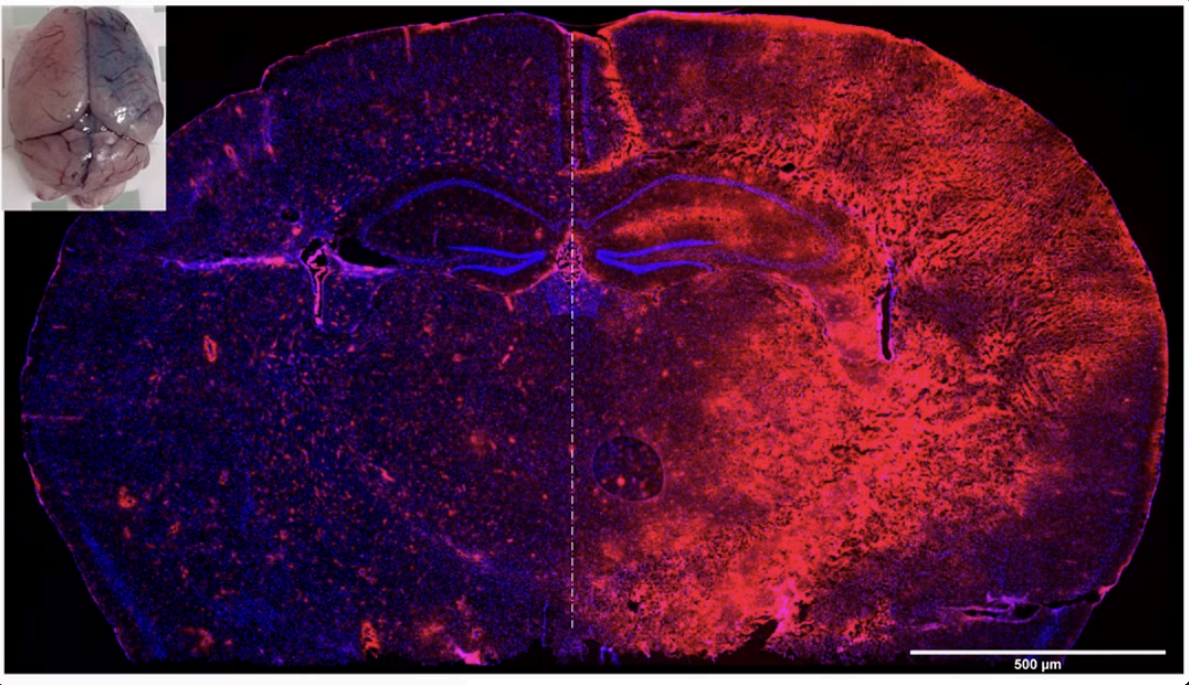
InnoSer’s in-house data has demonstrated that MPTP administration leads to NLRP3 inflammasome activation in the substantia nigra (SN) as detected by fluorescence immunohistochemistry (IHC).
MPTP Mouse Model of Parkinson’s Disease Readouts
Histopathology analyses
Test the efficacy of your treatments with the following markers:
- Neuroinflammation markers (i.e., Iba1, Asc)
The People Behind Your Research

Thomas Vogels, PhD, In Vivo Neurology Study Director
Leads an expert team of scientists with vast experience in our Neurology models to help you choose the right model and guide your optimal study design. We provide the solution to accelerating your drug development.
Struggling with getting your therapeutics across the blood-brain-barrier?
Discover how SonoCloud® ultrasound-mediated BBB disruption can improve brain uptake — without altering your compound.
Frequently Asked Questions
How does the MPTP mouse model differ to other available Parkinson’s disease mouse models?
The MPTP model belongs to the toxin-induced class of Parkinson’s disease mouse models and differs substantially from transgenic and α-synuclein spreading models. Compared with transgenic α-synuclein models such as the M83 mouse model, the MPTP model provides rapid study timelines driven by acute neurotoxicity-driven pathology manifesting as dopaminergic neurodegeneration with associated neuroinflammatory components (i.e., NLRP3 inflammasome activation).
Compared with transgenic Parkinson’s disease mouse models, the MPTP model offers shorter study timelines, high reproducibility, and straightforward pharmacological intervention paradigms. However, unlike toxin-induced models, transgenic α-synuclein mouse models capture progressive proteinopathy-driven disease biology. InnoSer works with the M83 A53T α-synuclein transgenic mouse model, which overexpresses human mutant α-synuclein under the mouse prion promoter and develops progressive α-synuclein aggregation, Lewy body-like pathology, motor impairment, and neurodegeneration over time.
In contrast to toxin-induced Parkinson’s disease mouse models and transgenic alpha-synuclein mouse models, αlpha-synuclein PFF seeding mouse models focus on aggregation and propagation of pathological αlpha-synuclein species across connected brain regions. These α-synuclein seeding and spreading models are increasingly considered among the most translationally relevant preclinical Parkinson’s disease models for studying aggregation-targeting therapeutics, propagation inhibitors, and target engagement strategies. InnoSer works with the alpha-synuclein PFF seeding mouse model, which reproduces the prion-like propagation of pathological α-synuclein across synaptically connected brain regions. InnoSer also collaborates on advanced AAV α-synuclein overexpression and combined AAV + PFF paradigms, which may be relevant depending on your therapeutic strategy and target biology.
Because each Parkinson’s disease mouse model captures distinct aspects of disease biology, selecting the appropriate platform depends strongly on your therapeutic modality, target biology, mechanism of action, and desired translational endpoints.
Is the MPTP mouse model relevant for NLRP3 inflammasome research?
Yes, InnoSer’s in-house validation data has confirmed NLRP3 inflammasome activation in MPTP-treated mice alongside motor impairments, making the model directly relevant to neuroinflammation-targeting therapeutic strategies.
MPTP exerts its neurotoxicity through a cascade of oxidative stress, mitochondrial complex I inhibition, neuroinflammation, and excitotoxicity acting in concert to cause dopaminergic neuronal damage, and neuroinflammatory activation, including microglial NLRP3 inflammasome assembly. NLRP3 inhibitors, microglial modulators, and anti-neuroinflammatory biologics are therefore well-positioned for evaluation in InnoSer’s MPTP model.
Discover Other Relevant Disease Models


Discover InnoSer’s Latest Research
![Cognitive profiling in the APP[V717I]xTau[P301S] mouse model](https://www.innoserlaboratories.com/wp-content/uploads/2026/07/Figure-1-MWM.png)
Cognitive profiling in the APP[V717I]xTau[P301S] mouse model
In this month's update, we revisit the APP[V717I]xTau[P301S] model with newly in-house generated Morris Water Maze (MWM) data, reconfirming the spatial memory deficits previously described for this model and reinforcing the translational value of the model.The...
![Translational Neuroscience: Comprehensive longitudinal profiling of the Tau[P301S] female vs male mice](https://www.innoserlaboratories.com/wp-content/uploads/2026/06/Female-TauP301S-mice-show-early-spontaneous-hyperactivity-in-automated-home-cages-PhenoTyperTM-229375_1080x323.png)
Translational Neuroscience: Comprehensive longitudinal profiling of the Tau[P301S] female vs male mice
In this month’s newsletter, we highlight and build upon our knowledge working with the Tau[P301S] mouse model (originally described by Allen et al., 2002), and its applicability in preclinical research.Female and male...

Clinically relevant biomarker panels for comprehensive efficacy studies in Alzheimer’s Disease mouse models
InnoSer's validated Alzheimer's disease (AD) mouse models are equipped with translationally relevant biomarker readout panels — spanning amyloid-beta (Aβ) species, phosphorylated Tau isoforms, and the early, sensitive hallmark of neurodegeneration, neurofilament light...
![Proven Compound Susceptible Tau[P301S] Mouse Model for Preclinical Proof of Concept](https://www.innoserlaboratories.com/wp-content/uploads/2026/03/Proven-Compound-susceptible-TauP301S-mouse-model-for-preclinical-proof-of-concept--1080x675.png)
Proven Compound Susceptible Tau[P301S] Mouse Model for Preclinical Proof of Concept
The Tau[P301S] mouse remains one of the most established in vivo models for evaluating therapeutics targeting tauopathies including Alzheimer's disease and frontotemporal dementia (FTD). Presented at AD/PD 2025 in Vienna, this poster provides comprehensive...
AAALAC Accreditation
InnoSer has earned the AAALAC accreditation, demonstrating our commitment to responsible animal care and use. AAALAC International is a nonprofit organization that promotes the humane treatment of animals in science through voluntary accreditation and assessment programs. InnoSer’s facilities in the Netherlands and Belgium have been AAALAC-accredited since 2016 and 2020, respectively. Read more about the AAALAC accreditation programme here.

Animal Welfare
The 3Rs impact everything from policy and regulatory change to the development and uptake of new technologies and approaches. This is why InnoSer has ongoing commitment and monitoring of these processes. The steps we practice maximize our ability to replace, reduce and refine animal involvement and facilitate our commitment to these principles when it comes to research and drug development.
info@innoserlaboratories.com