
Frontotemporal dementia (FTD) mouse models
Explore InnoSer’s Preclinical FTD mouse model research expertise, leveraging mouse models with known Tau and TDP-43 FTD-linked pathology
Your Preclinical Frontotemporal Dementia Research with InnoSer
✓ Behavioral & Cognitive Tests
✓ Smart Pathological Assessments
✓ Fast Study Initiation
✓ Tailored Study Designs
✓ Dedicated Research Cooridnators
As a European preclinical neurology CRO, InnoSer provides you with a portfolio of frontotemporal dementia (FTD) mouse models that are relevant for performing preclinical efficacy research studies targeting the core proteinopathies of FTD — Tau and TDP-43. By choosing InnoSer as your partner CRO, you will work alongside our expert study directors who take a collaborative approach for your study, accommodating your study timelines and budget needs. InnoSer’s neurology expert team possesses relevant experience in working with multiple therapy types ranging from small molecules, peptides, enzymes, oligonucleotides, gene therapy (viral vectors — e.g., AAVs) and immunotherapies (antibody/vaccine immunotherapies).
InnoSer offers preclinical research services leveraging mouse models targeting both the tau and TDP-43 axes of FTD pathology, providing a direct preclinical bridge between your compound’s mechanism of action and the two most commercially active target classes in the current FTD therapeutic pipeline. However, as each model is unique, modelling distinct pathophysiological aspects of FTD, we recommend you discuss the most appropriate model with our neurology study directors.
InnoSer’s Available FTD Model Types

TDP-43 Transgenic Mouse Model
InnoSer offers services with several different transgenic TDP-43 mouse models that replicate the TDP-43 proteinopathy in ALS and FTD patients.

Transgenic Tau Mouse Models
InnoSer offers unique research services with several different transgenic tau models, which recapitulate the Tau neurofibrillary tangle pathology of AD.

Tau Seeding & Spreading Mouse Models
InnoSer uses an AD brain extract injection model, providing unique preclinical services with a translational model of Tau pathology seeding and spreading.
InnoSer’s Available Alzheimer’s Disease Mouse Models

Transgenic PS19 Mouse Model
Leverage one of the most widely used mouse models in preclinical research to evaluate the efficacy of your compound targeting tau pathology

Tau[P301S] Mouse Model
Leverage InnoSer’s proprietary Tau[P301S] mouse model with reproducible and aggressive Tau pathology for fast, decision-driven preclinical efficacy studies
![Tau[P301L] Mouse Model](https://www.innoserlaboratories.com/wp-content/uploads/2026/05/TauP301L-Mouse-Model.png)
Tau[P301L] Mouse Model
Leverage InnoSer’s Tau[P301L] mouse model with progressive, well-characterized Tau pathology for mechanism-driven preclinical efficacy studies
Don’t See Your Model? We Can Help!
Our experts specialize in tailored solutions to meet your unique research needs. Let’s discuss how we can support your project.
The People Behind Your Research

Sofie Carmans, PhD
Principal Scientist Neurology

Thomas Vogels, PhD
Principal Scientist Neurology
Frequently Asked Questions
Which core pathological mechanisms are covered by InnoSer’s FTD mouse models portfolio?
InnoSer’s FTD mouse models portfolio is designed to capture the two major proteinopathy axes relevant to human disease:
- Tau-associated FTD pathology: Our tau-focused model portfolio includes transgenic tau mouse models and seeding and spread tau mouse models that recapitulate key aspects of tau-driven neurodegeneration, including aggregation, spread, and progressive neuronal dysfunction. Transgenic tau models express the FTD-linked MAPT mutations such as P301S (Tau[P301S0 mouse model) and P301L (Tau[P301L] mouse model). For tau seed and spread studies, whilst we most commonly use brain extracts from aged Tau[P301S] mice, these models offer more flexibility in the choice of seeds to induce progressive propagation of tau pathology across brain regions whereby seeding studies can be performed with brain extracts obtained from patients with confirmed FTD pathology.
- TDP-43-associated FTD pathology: InnoSer has characterized a transgenic mouse model harbouring the human ALS/ FTD-associated TDP-43 mutation (Q311K) in the TARDBP gene. The TDP-43Q311K mouse model reproduces the pathophysiological phenotypes of human ALS/FTD, namely motor dysfunction in the absence of overt TDP-43 aggregations, allowing you to perform longitudinal motor function assessment studies focusing on rescuing functional aspects of ALS and FTD.
Does InnoSer perform preclinical research services in mouse model harboring the C9orf72 hexanucleotide repeat mutation associated with FTD and ALS?
InnoSer has not characterized a mouse model of FTD harbouring the C9orf72 hexanucleotide repeat mutation associated with FTD and ALS.
At present, various mouse models that recapitulate distinct disease-related pathological, functional, and behavioral phenotypes have been generated and characterized across scientific literature, supporting their relevance for preclinical efficacy testing of novel FTD and/or ALS-targeting therapeutics.
However, scientists at InnoSer frequently collaborate with researchers to set-up specific and novel mouse models for preclinical efficacy studies.
Related Research Posters
![Sex differences in preclinical tauopathy models remain undercharacterized, yet they carry important implications for study design and translational validity. Presented at AD/PD 2026 in Copenhagen, this poster describes a longitudinal phenotyping study of male and female Tau[P301S] mice from 2 to 5.25 months of age.](https://www.innoserlaboratories.com/wp-content/uploads/2026/03/CHARACTERIZING-SEX-DIFFERENCES-IN-THE-TAUP301S-MOUSE-MODEL-OF-TAUOPATHIES-.png)
![Tau[P301S] mice show compound-reversible LTP deficits and progressive tau pathology. A pharmacologically responsive model for tauopathy efficacy studies.](https://www.innoserlaboratories.com/wp-content/uploads/2026/03/Proven-Compound-susceptible-TauP301S-mouse-model-for-preclinical-proof-of-concept-.png)


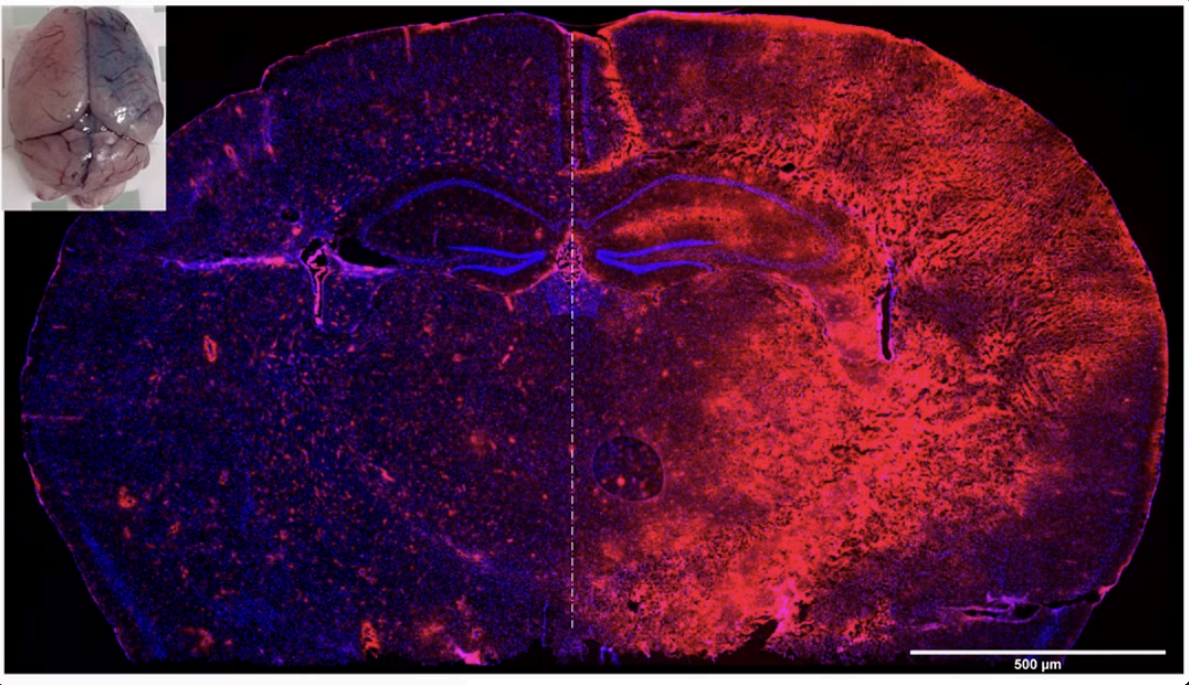
Struggling with getting your therapeutics across the blood-brain-barrier?
Discover how SonoCloud® ultrasound-mediated BBB disruption can improve brain uptake — without altering your compound.
Stay Curious: More Articles to Explore
Neurodevelopmental disorder mouse models at InnoSer — TSC, Rett & STXBP1
in this month's update, we invite you to explore recent developments in rare neurodevelopmental disorders associated with epilepsy and seizure phenotypes. We highlight emerging therapeutic approaches, discuss the importance of selecting translationally relevant...

Plasma NfL, p-tau217, or Aβ42/40: Which Alzheimer’s disease biomarkers should you include in your preclinical efficacy study?
A practical guide to preclinical Alzheimer’s disease biomarkers panel selection when you’re considering outsourcing to a specialist neurology CRO Biomarkers have transformed Alzheimer's disease clinical trials, enabling diagnosis confirmation for trial eligibility,...

Transgenic Amyloid, Tau, Seeding, or combined Amyloid/Tau pathology mouse models — which is the right one for your drug development program?
A practical guide to model selection when outsourcing your Alzheimer's disease efficacy study to a specialist neurology CRO Choosing the right Alzheimer's disease mouse model is one of the most consequential early decisions in a preclinical drug development program....

Morris Water Maze, Rotarod and beyond: How do you build a comprehensive behavioral test battery when outsourcing your preclinical Alzheimer’s disease efficacy study?
A practical introduction to behavioural test battery selection when outsourcing your Alzheimer's disease efficacy study to a specialist neurology CRO When outsourcing a preclinical Alzheimer's disease efficacy study, behavioral endpoint selection is one of the most...
AAALAC Accreditation
InnoSer has earned the AAALAC accreditation, demonstrating our commitment to responsible animal care and use. AAALAC International is a nonprofit organization that promotes the humane treatment of animals in science through voluntary accreditation and assessment programs. InnoSer’s facilities in the Netherlands and Belgium have been AAALAC-accredited since 2016 and 2020, respectively. Read more about the AAALAC accreditation programme here.

Animal Welfare
The 3Rs impact everything from policy and regulatory change to the development and uptake of new technologies and approaches. This is why InnoSer has ongoing commitment and monitoring of these processes. The steps we practice maximize our ability to replace, reduce and refine animal involvement and facilitate our commitment to these principles when it comes to research and drug development.
info@innoserlaboratories.com