
Metabolic disease models – Diet-induced Obesity DIO Mouse Model
Study the efficacy of your novel anti-obesity therapeutics using the DIO mouse model
DIO Mouse Model Characteristics
The diet-induced obesity DIO mouse model represents a physiological approach to studying efficacy of novel compounds against obesity and related metabolic disorders in a preclinical research setting. Maintaining C57BL/6N mice on a Western-style high-fat diet (HFD) comprising 60% fat content, the DIO mouse model develops many hallmarks of metabolic disease such as obesity, insulin sensitivity, elevated fasting blood glucose and insulin resistance. Additionally, using various behavioral phenotyping protocols, at InnoSer we have demonstrated that HF-fed mice show substantial reduction in general activity, nest building capacity as well as memory performance (e.g., during behavioral tests such as Morris Water Maze [MWM]).
Depending on study timelines, this model can be adapted to study varying stages of metabolic dysfunction, including pre-diabetes, type 2 diabetes mellitus (T2DM) and more severe insulin resistance in the setting of Western diet and obesity. Unlike genetic metabolic models such as the db/db mouse model, the DIO model reflects lifestyle-induced obesity seen in humans, providing you with a highly translational mouse model to study efficacy of novel anti-obesity strategies. Combined with InnoSer’s expertise in behavioral neuroscience studies, the DIO mouse model is also suitable to evaluate efficacy of compounds against metabolic disease-associated cognitive dysfunctions which is currently an emerging area of research within the metabolic disease field. Contact us today to discuss how this model can support your research objectives in preclinical metabolic health research.
✓ Mouse model of physiological induction of obesity
✓ Mice show key hallmarks of metabolic disease (obesity, insulin resistance, hyperglycemia)

As a preclinical metabolic CRO, InnoSer’s team delivers you with a range of high-quality in vivo models for key metabolic diseases with different associated risk factors and aetiologias. This selection allows you to test therapeutic efficacy to prevent or reverse insulin resistance, pre-diabetes, obesity type 2 diabetes mellitus (T2DM), and/or MAFLD/MASH (NASH/NAFLD). To study metabolic disease-associated cardiovascular complications and cardiac dysfunction, InnoSer recommends the use of the Western diet-induced diabetic cardiomyopathy rat model. Reach out to our team to discuss the most suitable model to answer your research questions.
DIO Mouse Model Sample Data
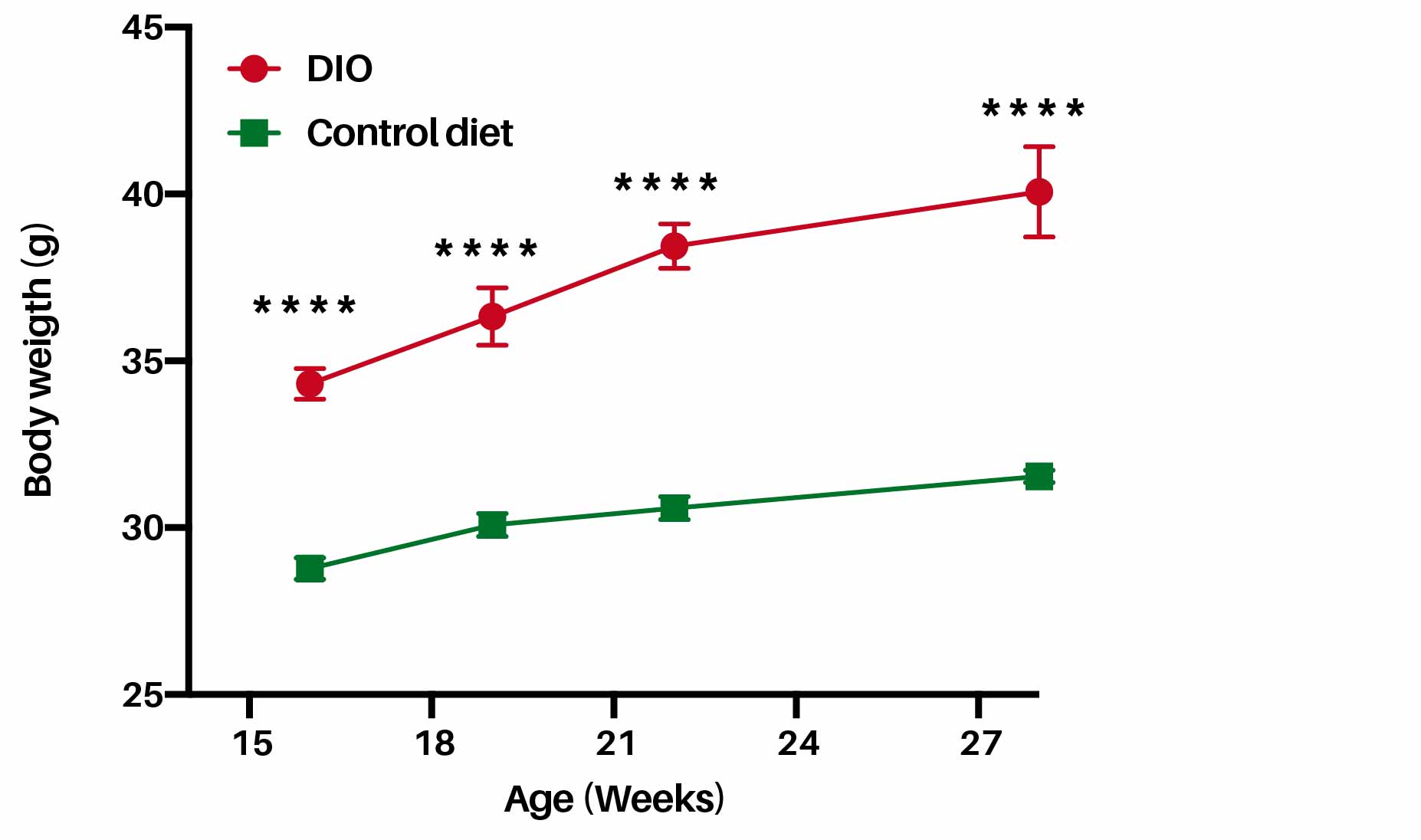
Persistent hypercaloric intake drives body weight increases DIO mice
Pre-fed male C57BL/6JRj mice on HFD show progressive body weight gain from 16 to 27 weeks of age. Body weight was monitored throughout the study in pre-fed male DIO and age-matched male control mice. DIO mice had been maintained on HFD (60% kcal from fat) by the supplier from 6 weeks of age and continued on the HFD throughout the study at InnoSer. Data shown as M±SEM.
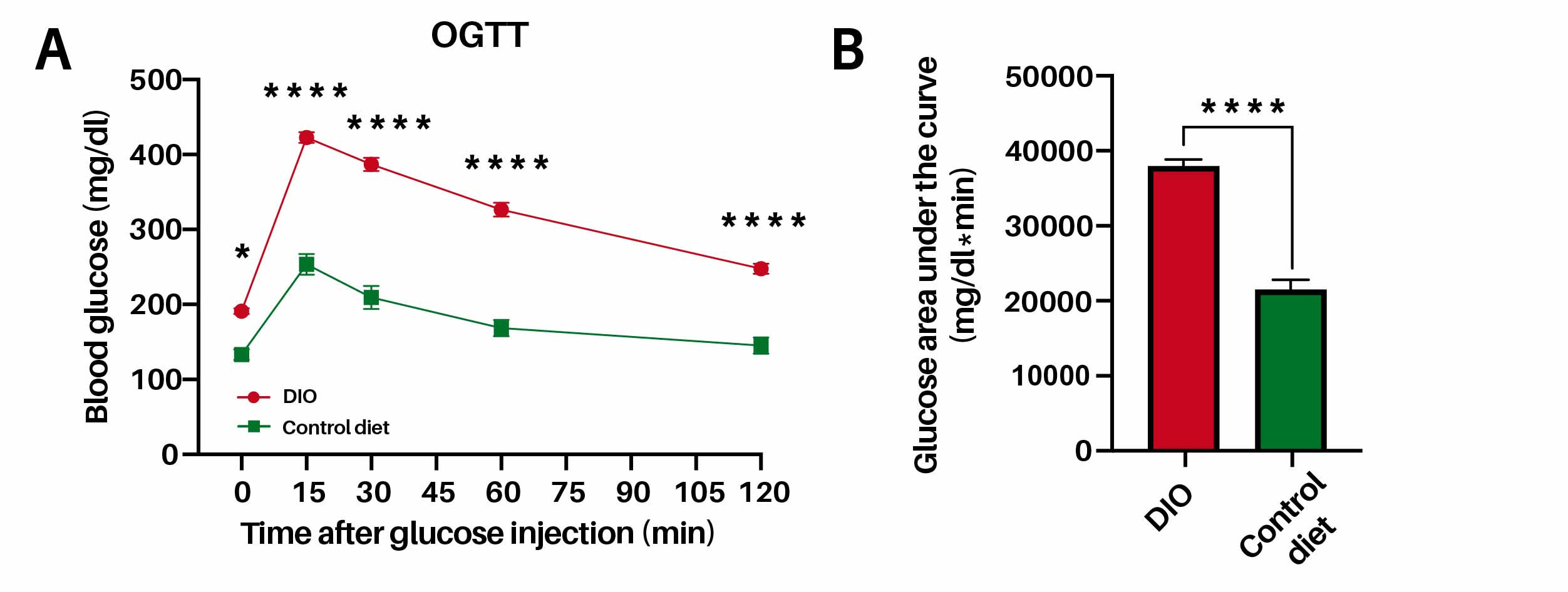
Persistent hypercaloric intake drives impaired glucose tolerance at 16 weeks of age in DIO mice
Pre-fed male C57BL/6JRj mice on HFD show impaired glucose tolerance following prolonged hypercaloric feeding. (A) Glucose tolerance curve (B) Area under the curve (AUC). Glucose tolerance was assessed by oral glucose tolerance testing (OGTT) in male mice on HFD and age-matched control mice at 16 weeks of age. Mice were fasted for four hours before receiving an oral glucose bolus (2 g/kg), and blood glucose levels were measured at baseline and 15, 30, 60, and 120 minutes post-administration. Data shown as M±SEM.
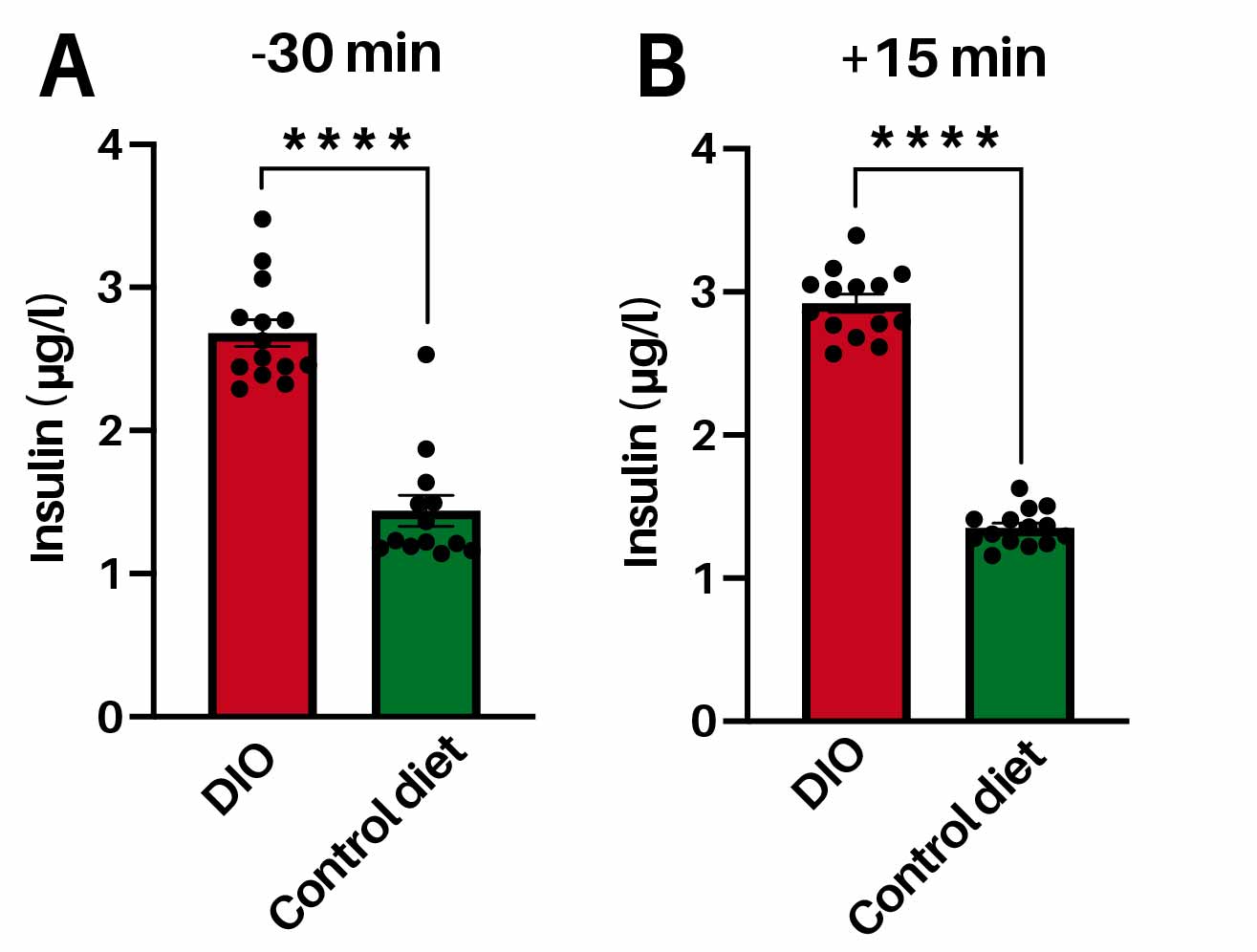
Persistent hypercaloric intake drives insulin resistance at 19 weeks of age in DIO mice
Elevated fasted insulin levels in pre-fed male C57BL/6JRj mice on HFD before and following glucose administration, consistent with a compensatory insulin response and an insulin-resistant metabolic phenotype. Animals were fasted for four hours, and insulin levels were assessed in pre-fed male DIO and age-matched controls at 19 weeks of age at baseline (30 minutes before OGTT start) and 15 minutes after glucose administration via submandibular puncture. Insulin concentrations were determined by ELISA (Mouse Insulin ELISA, Mercodia, 10-1247). Data shown as M±SEM.
DIO Mouse Model Readouts
The People Behind Your Research

Yanick Fanton, PhD, Chief Scientific Officer
As Chief Science Officer at InnoSer, Yanick is responsible for all customer studies at InnoSer and takes care of the scientific and technical coordination.

Lisa Claes, Study Director, Cardiometabolic Studies
Lisa oversees the scientific execution and coordination of cardiometabolic studies at InnoSer, ensuring high-quality study delivery
Discover Other Related Metabolic Disease Mouse Models


Stay Curious: More Articles to Explore

High-Fat Cholesterol and Fructose Diet Induces Cognitive Deficits in a Mouse Model of NAFLD
Epidemiological evidence suggests that western-style diet and the resulting non-alcoholic fatty liver disease (NAFLD) negatively impact cognitive performance, yet this relationship had not been formally investigated in a mouse model. Presented at the 6th Global NASH...

Project Completion Announcement: CARDIOIDS Collaboration with Professor Leon de Windt Advances Arrhythmogenic Cardiomyopathy (ACM) Research
In its role as an industry research partner, InnoSer is pleased to announce the successful completion of the CARDIOIDS project, a consortium-led initiative led by Professor Leon de Windt at Maastricht University. This project represents a major milestone in...

Latest cardiovascular and metabolic research news
InnoSer offers a selection of gold standard cardio-metabolic disease models in rodents, supporting custom studies to optimize the preclinical development of your drug candidates. Learn more about you can leverage InnoSer’s experience and expertise in the cardio and...
AAALAC Accreditation
InnoSer has earned the AAALAC accreditation, demonstrating our commitment to responsible animal care and use. AAALAC International is a nonprofit organization that promotes the humane treatment of animals in science through voluntary accreditation and assessment programs. InnoSer’s facilities in the Netherlands and Belgium have been AAALAC-accredited since 2016 and 2020, respectively. Read more about the AAALAC accreditation programme here.

Animal Welfare
The 3Rs impact everything from policy and regulatory change to the development and uptake of new technologies and approaches. This is why InnoSer has ongoing commitment and monitoring of these processes. The steps we practice maximize our ability to replace, reduce and refine animal involvement and facilitate our commitment to these principles when it comes to research and drug development.
info@innoserlaboratories.com