
Induced Parkinson’s Disease mouse models – MPTP Mouse Model of Parkinson’s Disease
Rapidly evaluate the neuroprotective and neuroinflammation-targeting effects of your novel therapeutic, leveraging the MPTP-induced Parkinson’s disease mouse model
MPTP Mouse Model of Parkinson’s Disease Characteristics
The MPTP mouse model is one of the most widely used toxin-induced mouse models for Parkinson’s disease research and preclinical efficacy testing.
Degeneration of dopaminergic neurons in the substantia nigra pars compacta (SNpc) is one of the central pathological hallmarks underlying motor symptoms in Parkinson’s disease. Injecting wild-type mice with MPTP, a neurotoxin that selectively targets dopaminergic neurons of the nigrostriatal pathway, results in key pathological and behavioral phenotypes relevant to Parkinson’s disease. Following systemic administration, MPTP readily crosses the blood-brain barrier where it is metabolized it into its active toxic metabolite, MPP+. MPP+ is then selectively taken up by dopamine transporters on dopaminergic neurons, where it induces mitochondrial complex I dysfunction, oxidative stress, neuroinflammation, and ultimately dopaminergic neurodegeneration, reproducing key disease mechanisms highly relevant to Parkinson’s disease pathology.
Compared with transgenic α-synuclein mouse models, the MPTP model offers a fast induction of Parkinson’s disease-like pathology with flexible study timelines. At InnoSer, the MPTP mouse model can be used as a rapid and translationally relevant research tool for performing early-stage efficacy testing of neuroprotective compounds, anti-inflammatory therapeutics, and NLRP3 inflammasome inhibitors.
✓ The MPTP mouse model represents a rapid mouse model of dopaminergic degeneration
✓ MPTP dosing leads to motor impairments relevant to Parkinson’s disease
✓ InnoSer’s in-house validation has demonstrated that MPTP dosing leads to neuroinflammatory activation, including NLRP3 inflammasome signalling

Take advantage of InnoSer’s expertise, flexibility and collaborative approach for your research. Our in-house neurology experts have long standing experience with modelling PD in vivo and are help guide your decision on choosing the best model fit for your current research goals.
InnoSer’s neurology expert team possesses relevant experience in working with multiple therapy types ranging from small molecules, peptides, enzymes, oligonucleotides, gene therapy (viral vectors – e.g.. AAVs) and immunotherapies (antibody/vaccine immunotherapies).
Ihre neurologische Forschung beginnt hier.
Explore InnoSer's Expertise in Mouse Models for Preclinical Efficacy Research

MPTP Mouse Model of Parkinson’s Disease Sample Data

The MPTP mouse model represents a rapid mouse model of Parkinson’s disease, suitable for early-stage efficacy and/or proof of concept studies targeting neuroinflammation.
MPTP administration leads to a decrease in spontaneous activity assessed using the PhenoTyperTM cages days following injection, which is partially prevented by co-administration of a neuroprotectant. The activity of mice was tracked in their automated home cages; mice display a variety of spontaneous behaviours tracked at high resolution with video cameras and do not require human intervention.

The MPTP mouse model represents a rapid mouse model of Parkinson’s disease, suitable for early-stage efficacy and/or proof of concept studies targeting neuroinflammation.
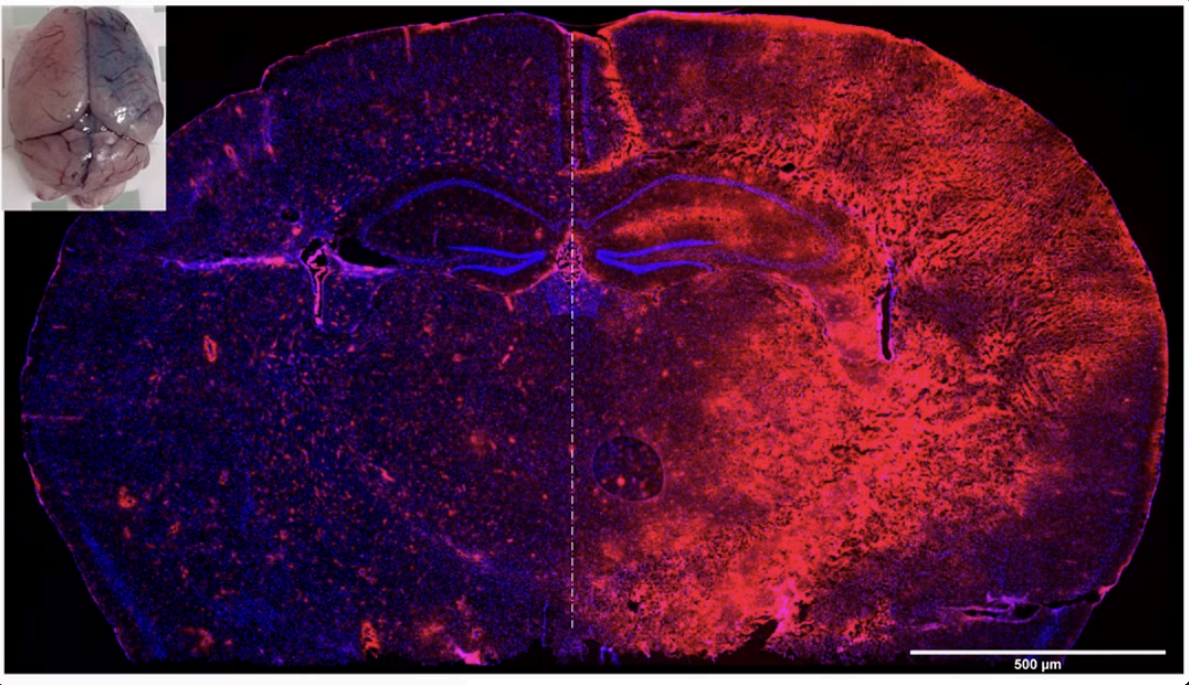
InnoSer’s in-house data has demonstrated that MPTP administration leads to NLRP3 inflammasome activation in the substantia nigra (SN) as detected by fluorescence immunohistochemistry (IHC).
MPTP Mouse Model of Parkinson’s Disease Readouts
Histopathology analyses
Test the efficacy of your treatments with the following markers:
- Neuroinflammation markers (i.e., Iba1, Asc)
Die Menschen hinter Ihrer Forschung

Dr. Thomas Vogels, In Vivo Neurologie Studienleiter
Leitet ein Expertenteam aus Wissenschaftlern mit umfassender Erfahrung in unseren neurologischen Modellen, um Ihnen bei der Auswahl des richtigen Modells zu helfen und begleitet Sie bei der optimale Studienaufbau. Wir bieten die Lösung, um BeschleunigungeBeschleunigung Ihrer Arzneimittelentwicklung.
Haben Sie Schwierigkeiten, Ihre Wirkstoffe durch die Blut-Hirn-Schranke zu transportieren?
Erfahren Sie, wie die ultraschallgestützte Durchbrechung der Blut-Hirn-Schranke mit SonoCloud® die Aufnahme im Gehirn verbessern kann – ohne Ihren Wirkstoff zu verändern.
Häufig gestellte Fragen
How does the MPTP mouse model differ to other available Parkinson’s disease mouse models?
The MPTP model belongs to the toxin-induced class of Parkinson’s disease mouse models and differs substantially from transgenic and α-synuclein spreading models. Compared with transgenic α-synuclein models such as the M83 mouse model, the MPTP model provides rapid study timelines driven by acute neurotoxicity-driven pathology manifesting as dopaminergic neurodegeneration with associated neuroinflammatory components (i.e., NLRP3 inflammasome activation).
Compared with transgenic Parkinson’s disease mouse models, the MPTP model offers shorter study timelines, high reproducibility, and straightforward pharmacological intervention paradigms. However, unlike toxin-induced models, transgenic α-synuclein mouse models capture progressive proteinopathy-driven disease biology. InnoSer works with the M83 A53T α-synuclein transgenic mouse model, which overexpresses human mutant α-synuclein under the mouse prion promoter and develops progressive α-synuclein aggregation, Lewy body-like pathology, motor impairment, and neurodegeneration over time.
In contrast to toxin-induced Parkinson’s disease mouse models and transgenic alpha-synuclein mouse models, αlpha-synuclein PFF seeding mouse models focus on aggregation and propagation of pathological αlpha-synuclein species across connected brain regions. These α-synuclein seeding and spreading models are increasingly considered among the most translationally relevant preclinical Parkinson’s disease models for studying aggregation-targeting therapeutics, propagation inhibitors, and target engagement strategies. InnoSer works with the alpha-synuclein PFF seeding mouse model, which reproduces the prion-like propagation of pathological α-synuclein across synaptically connected brain regions. InnoSer also collaborates on advanced AAV α-synuclein overexpression and combined AAV + PFF paradigms, which may be relevant depending on your therapeutic strategy and target biology.
Because each Parkinson’s disease mouse model captures distinct aspects of disease biology, selecting the appropriate platform depends strongly on your therapeutic modality, target biology, mechanism of action, and desired translational endpoints.
Is the MPTP mouse model relevant for NLRP3 inflammasome research?
Yes, InnoSer’s in-house validation data has confirmed NLRP3 inflammasome activation in MPTP-treated mice alongside motor impairments, making the model directly relevant to neuroinflammation-targeting therapeutic strategies.
MPTP exerts its neurotoxicity through a cascade of oxidative stress, mitochondrial complex I inhibition, neuroinflammation, and excitotoxicity acting in concert to cause dopaminergic neuronal damage, and neuroinflammatory activation, including microglial NLRP3 inflammasome assembly. NLRP3 inhibitors, microglial modulators, and anti-neuroinflammatory biologics are therefore well-positioned for evaluation in InnoSer’s MPTP model.
Entdecken Sie weitere relevante Krankheitsmodelle


Entdecken Sie die neuesten Forschungsergebnisse von InnoSer

Neurodevelopmental disorder mouse models at InnoSer — TSC, Rett & STXBP1
in this month's update, we invite you to explore recent developments in rare neurodevelopmental disorders associated with epilepsy and seizure phenotypes. We highlight emerging therapeutic approaches, discuss the importance of selecting translationally relevant...

Plasma NfL, p-tau217, or Aβ42/40: Which Alzheimer’s disease biomarkers should you include in your preclinical efficacy study?
A practical guide to preclinical Alzheimer’s disease biomarkers panel selection when you’re considering outsourcing to a specialist neurology CRO Biomarkers have transformed Alzheimer's disease clinical trials, enabling diagnosis confirmation for trial eligibility,...

Transgenic Amyloid, Tau, Seeding, or combined Amyloid/Tau pathology mouse models — which is the right one for your drug development program?
A practical guide to model selection when outsourcing your Alzheimer's disease efficacy study to a specialist neurology CRO Choosing the right Alzheimer's disease mouse model is one of the most consequential early decisions in a preclinical drug development program....

Morris Water Maze, Rotarod and beyond: How do you build a comprehensive behavioral test battery when outsourcing your preclinical Alzheimer’s disease efficacy study?
A practical introduction to behavioural test battery selection when outsourcing your Alzheimer's disease efficacy study to a specialist neurology CRO When outsourcing a preclinical Alzheimer's disease efficacy study, behavioral endpoint selection is one of the most...
AAALAC-Akkreditierung
InnoSer hat die AAALAC-Akkreditierung erhalten und damit sein Engagement für einen verantwortungsvollen Umgang mit Tieren unter Beweis gestellt. AAALAC International ist eine gemeinnützige Organisation, die sich durch freiwillige Akkreditierungs- und Bewertungsprogramme für den artgerechten Umgang mit Tieren in der Wissenschaft einsetzt. Die Einrichtungen von InnoSer in den Niederlanden und Belgien sind seit 2016 bzw. 2020 AAALAC-akkreditiert. Weitere Informationen zum AAALAC-Akkreditierungsprogramm finden Sie hier.

Tierschutz
Die 3Rs wirken sich auf alle Bereiche aus, von politischen und regulatorischen Veränderungen bis hin zur Entwicklung und Einführung neuer Technologien und Ansätze. Aus diesem Grund engagiert sich InnoSer kontinuierlich für diese Prozesse und überwacht sie. Die von uns umgesetzten Maßnahmen maximieren unsere Fähigkeit, den Einsatz von Tieren zu ersetzen, zu reduzieren und zu verfeinern, und unterstützen unser Bekenntnis zu diesen Grundsätzen in der Forschung und der Arzneimittelentwicklung.
info@innoserlaboratories.com