
News, Resources, Updates
A scientific hub to keep you informed about our latest research and company updates.

Early Phenotypic Characterization of TDP-43 Q331K Mouse Model of ALS Reveals Elevated Plasma Neurofilament Light, Nerve Conduction Abnormalities and Behavioral Deficits
TDP-43 pathology underlies 97% of all ALS cases, making the TDP-43(Q331K) transgenic mouse a clinically relevant preclinical tool. Presented at SfN Neuroscience 2025 in San Diego, this poster provides longitudinal phenotypic characterization of female TDP-43(Q331K)...
![Characterizing Sex Differences in the Tau[P301S] Mouse Model of Tauopathies](https://www.innoserlaboratories.com/wp-content/uploads/2026/03/CHARACTERIZING-SEX-DIFFERENCES-IN-THE-TAUP301S-MOUSE-MODEL-OF-TAUOPATHIES--400x250.png)
Characterizing Sex Differences in the Tau[P301S] Mouse Model of Tauopathies
Sex differences in preclinical tauopathy models remain undercharacterized, yet they carry important implications for study design and translational validity. Presented at AD/PD 2026 in Copenhagen, this poster describes a longitudinal phenotyping study of male and...
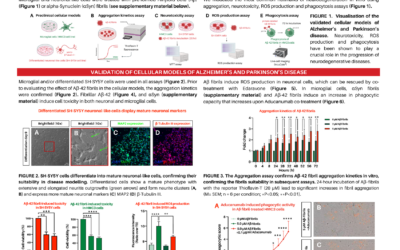
Characterisation of In Vitro Neuronal and Microglial Disease Models to Support Drug Discovery Efforts for Neurodegenerative Diseases
Efficient in vitro screening platforms are essential for accelerating drug discovery in Alzheimer's and Parkinson's disease. Presented at AD/PD 2024 in Lisbon and updated for AD/PD 2025 in Vienna, this poster from our Belgium neurology team presents validated...

HTT1a and HTTexon1 Huntington’s disease – A new therapeutic target explored in the zQ175 mouse model
We will build upon our experience with mutant huntingtin (mHTT) in the extensively profiled zQ175 knock-in mouse model of Huntington’s Disease, and highlight a new point of interest for therapeutic intervention discussed in the literature: the HTT1a mRNA transcript,...
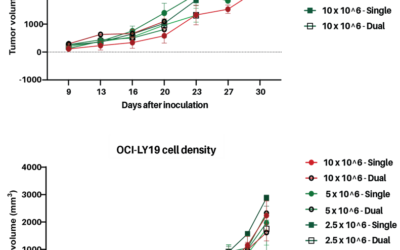
Personalized Lymphoma CDX mouse models for preclinical oncology
In recent studies, we established and validated two new human lymphoma cell‑line–derived xenograft (CDX) models, generated from the OCI‑Ly19 (diffuse large B‑cell lymphoma, DLBCL) and REC‑1 (mantle cell lymphoma) cell lines. These models were developed in strategic...

Modelling TDP-43 proteinopathy and motor neuron disease pathophysiology in mouse models
Transactivating response region (TAR) DNA binding protein (TDP-43) is a nuclear protein involved in regulating RNA transcription, splicing, trafficking, and microRNA biogenesis. TDP-43 is a major component of neuronal and glial inclusions in both the brain and the...
info@innoserlaboratories.com