ページを選択

Psoriasis Mouse Model (IL-23 Induced)

Perform quick efficacy tests to evaluate your novel psoriasis treatment strategies using the acute psoriasis mouse model

Home » Immunology CRO services » Psoriasis Mouse Model – IL-23 Induced

Psoriasis Mouse Model Key Characteristics 

Preclinical psoriasis mouse models are essential tools for understanding the pathogenesis of psoriasis and evaluating the efficacy of novel therapeutic approaches ranging from topical to systemic treatments. Acute models, such as the IL-23 and Imiquimod-induced models, rapidly induce psoriasis-like symptoms, while chronic models mimic the long-term progression of the disease. 

The acute psoriasis model, created by intradermal ear injections of recombinant IL-23, leads to acute skin inflammation. IL-23, a key cytokine, promotes pathogenic lymphocytes that drive keratinocyte differentiation and inflammation, hallmarks of psoriasis. This model mimics human psoriasis features, such as inflammatory cell infiltration, epidermal hyperplasia, and activation of inflammatory pathways. 

当社の前臨床サービスについて、さらに詳しい情報をお探しですか?

✓  Rapid induction of psoriasis-like symptoms.

✓  Phenotype exhibits key psoriasis hallmarks, including inflammatory cell infiltration and epidermal hyperplasia.

✓  Suitable for testing IL-23 inhibitors and other modulators of the IL-23-induced inflammation pathway.

乾癬マウスモデル

As a preclinical immunology CRO, InnoSer offers relevant expertise to support various skin inflammation studies including psoriasis, atopic dermatitis, contact dermatitis, and scleroderma research. In accordance, our dermatological platform allows us to investigate the efficacy of your novel investigational compound(s) in similar models, including Imiquimod-induced psoriasis, Ovalbumin or Oxazole-induced atopic dermatitis, and the Bleomycin-induced scleroderma model. 

Take advantage of InnoSer’s collaborative approach to develop the most optimal study design. With flexible and fast study start times you can perform your research at an accelerated pace. By outsourcing your preclinical oncology studies to InnoSer, you gain access to our in vitro and in vivo immunology drug development portfolio. 

Psoriasis Mouse Model Sample Data

Key IL-23 Induced Mouse Model Readouts

Key readouts in the Psoriasis Mouse Model


Test the efficacy of your treatments in the IL-23-induced psoriasis mouse model with the following readouts 

  • Body weight determination, clinical observations 
  • Measurement of ear thickness (assessment of swelling)  
  • Blood collection for PK/PD analyses 
  • Biomarker analyses  
  • Histopathology (to determine the extent and presence of acanthosis, inflammatory cell infiltration, spongiosis, perivascular lymphocyte infiltration, vesicles and pustules, formation, and hyper-granulosis) 
  • Immunohistochemistry (e.g., FoxP3, CD34)  
  • Immune cell profiling (MSD, ELISA, flow cytometry, qPCR) 
  • Inflammatory cytokine analysis via MSD or ELISA

あなたの研究を支える人々

セリーヌ・エレンス博士、免疫学研究 ディレクター

当社の免疫学研究責任者が率いる専門家チーム セリーヌ・エレンス博士が率いる専門家チームが、 セリーヌ・エレンス博士が率いる専門チームが、お客様と協力し、 最適な 研究設計を確立するお手伝いをいたします。分野への深い理解をもって貴社のリード化合物の前臨床試験をキュレーションすることは、貴社の医薬品開発を加速させるための解決策です。

ヤニック・ファントン博士、最高科学責任者

イノサーの最高科学責任者として、ヤニックはイノサーにおける全ての顧客調査を担当し、科学的・技術的な調整業務を統括している。

よくあるご質問

What is the IL-23 psoriasis mouse model?

The IL-23 psoriasis mouse model is a widely used preclinical model for studying psoriasis pathogenesis and treatment efficacy. It mimics the chronic inflammation and skin lesions seen in human psoriasis by leveraging the role of IL-23, a key cytokine in driving disease progression. Intradermal injection of IL-23 (into the ear) induces a psoriasis-like inflammatory response. IL-23 promotes Th17 cell activation, leading to increased IL-17 and IL-22 production, which drives keratinocyte proliferation and skin thickening. The model exhibits hallmark psoriasis symptoms, including epidermal hyperplasia, erythema, scaling, and immune cell infiltration.

What is the role of IL-23 in the treatment of psoriasis?
IL-23 is a key pro-inflammatory cytokine that plays a central role in psoriasis pathogenesis. It drives the activation and maintenance of Th17 cells, which produce IL-17 and IL-22, leading to keratinocyte proliferation, skin inflammation, and chronic immune activation. Because IL-23 is upstream in the inflammatory cascade, blocking its activity can interrupt disease progression at an early stage. IL-23 inhibition prevents the activation of Th17 cells, leading to broader and more sustained immunosuppression. IL-23 inhibitors have shown longer-lasting effects with less frequent dosing compared to IL-17 blockers (Menter et al., 2021). Several biologics have been developed to specifically inhibit IL-23, leading to long-lasting disease control (Gooderham et al., 2018).
Can this model be used to study both early and chronic stages of psoriasis?
Given that the IL-23 mouse model of psoriasis is induced by IL-23 injections over a short period of time, this model only mimics the acute phases of the human course of psoriasis. The advantage of this model is that it induces psoriasis-like symptoms (ear thickening, epidermal inflammation) in a rapid manner, thus allowing you to obtain quick efficacy data in a proof-of-concept setting. To mimic the chronic course of psoriasis, other models can be recommended (Gangwar et al., 2023).
What are the timelines and deliverables for studies using this model?
The IL-23 injection model is a rapid and effective method for inducing psoriatic inflammation in mice, typically completed in 8–10 days. The timeline and key endpoints comprise:
  • Day -3 to 0: Acclimatization, baseline measurements (ear thickness, weight, images).
  • Days 0-8: Intradermal IL-23 injection (right ear, every 2 days), PBS control (left ear). Monitor inflammation (swelling, redness, scaling).
  • Days 9-10: Final assessments, tissue collection.

好奇心を持ち続けよう:さらに探求できる記事

Personalized Lymphoma CDX mouse models for preclinical oncology

Personalized Lymphoma CDX mouse models for preclinical oncology

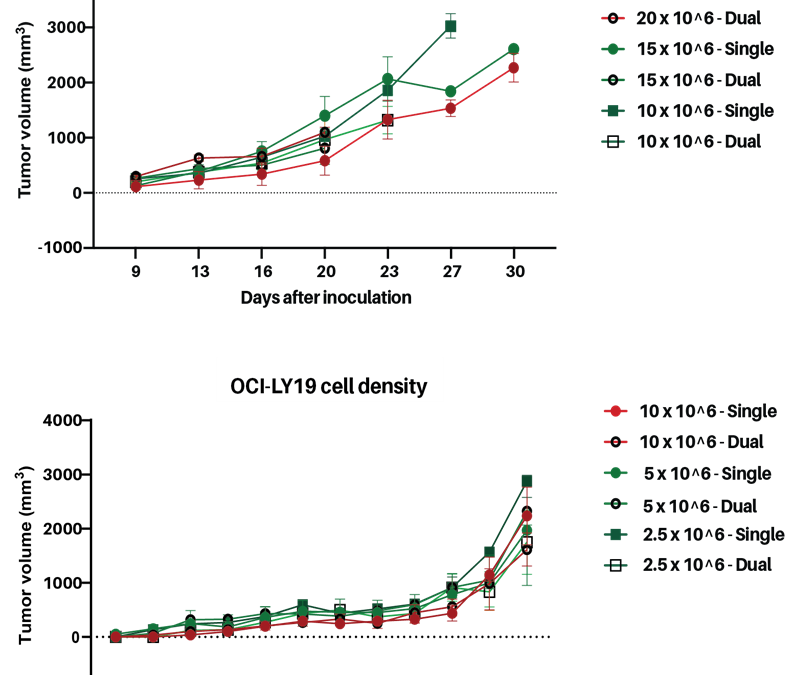
In recent studies, we established and validated two new human lymphoma cell‑line–derived xenograft (CDX) models, generated from the OCI‑Ly19 (diffuse large B‑cell lymphoma, DLBCL) and REC‑1 (mantle cell lymphoma) cell lines. These models were developed in strategic...

免疫腫瘍学研究におけるマルチプレックスサイトカインおよび免疫細胞プロファイリング

免疫腫瘍学研究におけるマルチプレックスサイトカインおよび免疫細胞プロファイリング

メソスケール・ディスカバリー(MSD)プラットフォームは、高感度かつ多重のサイトカインプロファイリング分析システムであり、ごく微量のサンプル(わずか1μL)から複数の標的サイトカイン、ケモカイン、抗体、成長因子を同時に定量することが可能です。これにより...

膵臓癌患者由来異種移植モデル

膵臓癌患者由来異種移植モデル

先月11月は膵臓がん啓発月間でした。これは最も攻撃的で致死率の高いがん種の一つがもたらす課題に焦点を当てる時期です。膵臓がんは欧州で診断される全がんの約3%を占め、膵臓...

AAALAC認定

InnoSerはAAALAC認証を取得し、責任ある動物ケアと利用への取り組みを実証しています。AAALAC Internationalは、自主的な認証および評価プログラムを通じて科学における動物の適切な扱いを推進する非営利組織です。InnoSerのオランダおよびベルギー施設は、それぞれ2016年および2020年よりAAALAC認証を取得しています。AAALAC認証プログラムの詳細はこちらをご覧ください。

AAALACロゴ

動物福祉

3R原則は、政策や規制の変更から新技術・手法の開発と普及に至るまで、あらゆる分野に影響を及ぼします。このためInnoSerは、これらのプロセスに対する継続的な取り組みと監視を実施しています。当社が実践する手順は、動物実験の代替・削減・改善を最大限に実現し、研究および医薬品開発におけるこれらの原則への取り組みを促進します。

義務なし – 今すぐ始めよう

info@innoserlaboratories.com