
News, Resources, Updates
A scientific hub to keep you informed about our latest research and company updates.
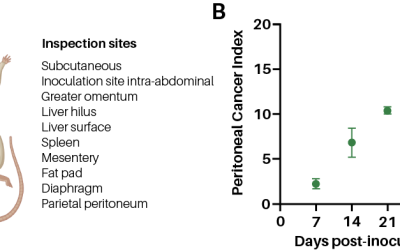
Peritoneal Cancer Index to Evaluate Efficacy in a Peritoneal Cancer Model
Peritoneal carcinomatosis (PC) represents an extreme form of metastatic cancer progression, commonly occurring in gastric, ovarian and colorectal cancers. Metastatic tumor models leading to PC help better understand the toxicities, timing and efficacy of novel...
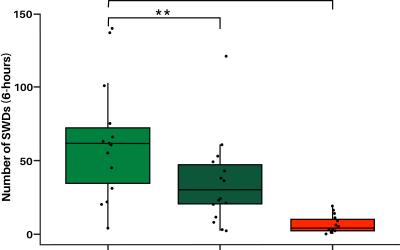
Longitudinal Efficacy Assessments of novel AEDs in the Stxbp1 +/- Epileptic Encephalopathy Model
Previously, we have briefly introduced you to the Stxbp1 +/- mouse model of early infantile epileptic encephalopathies. Patients with a mutation in the STXBP1 gene (Syntaxin-binding protein 1, encoding the presynaptic protein Munc18-1) can receive a variety of...

Translational In Vitro Assays to Screen Drug’s Efficacy for Alzheimer’s and Parkinson’s disease
Modelling neurodegenerative disease using in vitro assays Neurodegenerative drug development is held back due to the lack of appropriate models that help accelerate the pace at which novel therapeutic candidates move through the drug development pipeline. As such, in...

Validated Delayed-type Hypersensitivity Assay in Wild Type or Humanized Mice
Delayed-type hypersensitivity (DTH) in vivo assay represents a relatively quick and useful approach for evaluating the efficacy of potential immunomodulatory or immunosuppressive compounds. By challenging the cell-mediated immune response, you obtain valuable...
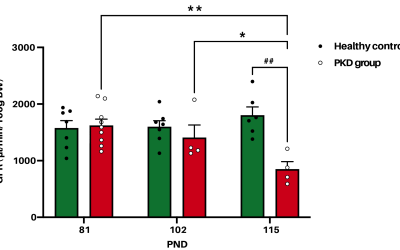
Validated Transdermal GFR Measurement in Kidney Disease Models
At InnoSer, we offer several readouts to assess the disease progression and the efficacy of novel targeted polycystic kidney disease (PKD) compounds. However, we understand that it remains a significant challenge to access crucial readouts that are recognized by...

Case Study: Acute Skin Inflammation Psoriasis Model
Performing efficacy studies using psoriasis models Psoriasis arises due to the dysregulation of the interplay between the innate and adaptive immune system together with other compartments such as epithelium, vasculature, and cutaneous nervous system. On the cellular...
info@innoserlaboratories.com