
Inflammatory Bowel Disease (IBD) Mouse Models
Boost the development of your novel treatment to improve gut health in individuals with IBD through InnoSer’s preclinical expertise and portfolio of IBD mouse models
IBD Mouse Models Key Characteristics
Inflammatory bowel disease (IBD) is a chronic, relapsing inflammation of the intestinal tract with a pathogenesis that is not yet fully understood. IBD encompasses two primary entities: Crohn’s disease (CD) and ulcerative colitis (UC). The main pathophysiological features of these diseases can be effectively modeled in mouse models.
Currently, there are multiple, complementary approaches to how IBD can be modeled in rodent models to accurately replicate the human disease pathophysiology. InnoSer offers a range of validated IBD mouse models, including chemically induced, adoptive transfer, and transgenic mouse models. Each model mimics specific aspects of IBD, allowing you to study the efficacy of different therapeutic mechanisms of action, such as reducing inflammation, epithelial repair, microbiome targeting, and innate and/or adaptive immunity modulation. We can facilitate preclinical research focusing on small molecule drugs, anti-inflammatory agents, biologicals, and other innovative treatment modalities. To learn more about InnoSer’s available IBD mouse models, download a leaflet below or consult our research expert team.
✓ Dextran Sulphate Sodium (DSS) mouse model of IBD
✓ TNBS (Trinitrobenzene sulfonic acid) mouse model of colitis

As a preclinical CRO, InnoSer works with well-established and clinically relevant IBD models, complemented with standardized study protocols to ensure consistency and reproducibility of your results. By choosing InnoSer as your preclinical IBD CRO, you will work alongside expert study directors who take a collaborative approach to your study.
With flexible and fast study start times you can perform your IBD research at an accelerated pace. By outsourcing your preclinical IBD studies to InnoSer, you gain access to our in vitro and in vivo immunology drug development portfolio.
Your IBD Research Starts Here.
Access detailed study timelines, essential readouts, and robust validation data for InnoSer’s offered IBD mouse models.

IBD Mouse Models Sample Data

The Dextran Sulfate Sodium (DSS)-Induced Colitis IBD mouse model represents a relatively easy and quick preclinical research model of IBD.
Histological H&E images of colonic mucosa of mice with DSS-induced colitis show inflammation, a decrease in crypt depth, epithelial cell loss, decrease in villus height and villus perimeter.

The Dextran Sulfate Sodium (DSS)-Induced Colitis IBD mouse model represents a relatively easy and quick preclinical research model for IBD.
C57BL/6 male mice were given no treatment, control), or DSS in varying concentrations (1.5%, 2%, 2.5%, and 3%) in drinking water. In response to acute treatment with DSS, mice show a progressive increase in disease activity index (DAI) score, a key marker of IBD disease progression in mice. DAI score takes into account stool composition, bleeding, and percentage of body loss.

The Dextran Sulfate Sodium (DSS)-Induced Colitis IBD mouse model represents a relatively easy and quick preclinical research model for IBD.
C57BL/6 male mice were given no treatment, control), or DSS in varying concentrations (1.5%, 2%, 2.5%, and 3%) in drinking water. In response to acute treatment with DSS, mice show a dose-dependent decrease in colon length.

The Dextran Sulfate Sodium (DSS)-Induced Colitis IBD mouse model represents a relatively easy and quick preclinical research model for IBD.
C57BL/6 male mice were given no treatment, control), or DSS in varying concentrations (1.5%, 2%, 2.5%, and 3%) in drinking water. In response to acute treatment with DSS, mice show a dose-dependent decrease in colon weight (corrected for body weight).

The Dextran Sulfate Sodium (DSS)-Induced Colitis IBD mouse model represents a relatively easy and quick preclinical research model for IBD.
C57BL/6 male mice were given no treatment, control), or DSS in varying concentrations (1.5%, 2%, 2.5%, and 3%) in drinking water. In response to acute treatment with DSS mice show a progressive decline in body weight, confirming the onset of colitis.
IBD Mouse Models Readouts
Die Menschen hinter Ihrer Forschung

Dr. Céline Erens, Studie zur Immunologie Leiterin
Ein Expertenteam unter der Leitung unseres Direktors für Immunologiestudien ; Céline Erens arbeitet eng mit Ihnen zusammen, um Sie bei der Einrichtung optimale Studienkonzepte zu entwickeln. Die Begleitung der präklinischen Tests Ihrer Leitverbindungen mit fundiertem Fachwissen ist der Schlüssel zur Beschleunigung Ihrer Arzneimittelentwicklung.

Dr. L.J.A.C (Luuk) Hawinkels, Associate Professor/Head of Research Laboratory Gastroenterology and Hepatology and LUMC, the Netherlands
Dr. Hawinkels acts as an external advisor to InnoSer. His laboratory’s research focuses on IBD, inflammation, and fibroblast cross-talk in the development and progression of gastrointestinal diseases.
Häufig gestellte Fragen
What is an IBD mouse model?
The Inflammatory Bowel Disease (IBD) mouse model is used to study chronic inflammatory disorders of the gastrointestinal tract, particularly ulcerative colitis and Crohn’s disease. These conditions are characterized by immune system dysregulation, leading to intestinal inflammation, damage, and ulceration. In preclinical research, IBD models help assess the pathophysiology of these diseases and test the efficacy of therapeutic interventions.
How to induce IBD in mice?
- Dextran Sodium Sulfate (DSS) Induction: DSS is a commonly used chemical that disrupts the intestinal epithelial barrier, leading to acute colitis. Mice are given DSS in their drinking water for a set period, followed by a recovery phase. This model is widely used to study acute inflammation, intestinal damage, and immune response. DSS can be dosed both acutely and chronically, leading to different disease progression timelines.
- T Cell Transfer Model: In this method, CD4+ T cells are isolated from a donor mouse and transferred into a recipient mouse, which induces chronic colitis. This model mimics the autoimmune aspect of IBD, as it is driven by T-cell-mediated inflammation. It is particularly useful for studying T-cell interactions and immunotherapy.
- Genetically Modified Mice: Some genetically modified mice, such as IL-10 knockout mice, spontaneously develop chronic colitis resembling human IBD. These mice have impaired immune regulation, making them valuable for long-term studies of immune tolerance and chronic inflammation.
- Trinitrobenzenesulfonic Acid (TNBS) Induction: TNBS is used to induce colitis by chemically modifying proteins in the colon and triggering an immune response. This model is more commonly used for studying Th1-driven inflammation and tissue damage in the intestines.
How do you assess inflammation and disease severity in the colon, avoiding possible variability related to colon sectioning?
- Longitudinal Sectioning: Longitudinal sections of the colon allow for a more comprehensive view of the intestinal tissue. By preparing longitudinal sections, we can assess the entire colon, reducing variability that can occur when only part of the colon is sampled. This approach also ensures better representation of colonic inflammation and lesion distribution.
- Histopathological Scoring: After sectioning, histopathological analysis is conducted by our in-house veterinary pathologists to evaluate inflammatory cell infiltration, tissue damage, and the presence of ulceration. Standardized scoring systems (e.g., the Histological Disease Activity Index) can be additionally used to assess the severity and extent of inflammation consistently across samples, minimizing observer bias.
Download our IBD mouse model leaflet to view example histopathology analyses in the IBD mouse model.
Is there a difference in disease pattern/onset between different mouse strains?
In models like DSS-induced colitis, strains such as C57BL/6 often show severe and acute inflammation, while BALB/c mice might exhibit milder disease and more chronic patterns of inflammation. Genetically modified strains (e.g., IL-10 knockout mice) typically develop chronic IBD due to impaired immune regulation, making them ideal for studying long-term disease progression. The mouse strain selection is crucial when designing studies as it affects immune responses, disease patterns, and the efficacy of therapeutic interventions.
How do you counteract the microbiocome, its influence and the differences in treatments, since the microbiome has a significant impact on the study outcome?
Maintaining microbiome consistency is crucial for ensuring reliable and reproducible results in Inflammatory Bowel Disease (IBD) studies. At InnoSer we take several steps to ensure reliability and reproducibility of your results in IBD studies, such as:
- Cohousing Mice: In IBD studies, we cohouse mice to reduce differences in microbiome composition between individual animals. Cohousing allows for natural microbial transfer between animals, promoting a more consistent microbiome across groups. This helps mitigate variations that could arise from isolated housing and provides more uniform conditions for all mice in the study. Cohousing also enables us to divide mice within the same cage into different treatment groups. By doing so, we account for intercage differences in the microbiome and reduce potential confounding effects of the microbiome on the study outcomes. This approach ensures that treatment effects are less influenced by microbiome variability and are more representative of the treatment’s true impact.
- Standardizing Environmental Conditions: We also standardize housing conditions (e.g., food, bedding, and environmental controls) to reduce any extraneous factors that might alter the microbiome composition. By controlling for these environmental variables, we ensure more consistent microbiome profiles across study groups.
What is the drop out rate for each model and do you take this along in the study design?
The dropout rate in IBD studies is estimated to be around 10-15%, depending on factors such as study duration, DSS impact, and the strain and sex of the animals. This means that out of every 12 animals in a group, approximately 1-2 animals may be lost due to complications.
However, to ensure robust statistical power, we recommend planning for an additional ~20% extra animals to account for variability within groups. This approach helps maintain reliable study outcomes and minimizes the risk of insufficient data to draw conclusions.
Are there specific readouts you recommend?
In the IBD mouse model, standard readouts to assess efficacy comprise clinical observations and Disease Activity Index Score (DAI). Both are key markers of disease progression, allowing you to assess efficacy of your compounds longitudinally. Moreover, clinical signs and DAI are assessed daily to enable a robust assessment of efficacy. The DAI is the combined score of weight loss compared to initial weight, stool consistency, and bleeding.
Depending on your research goals, your compounds mechanism of action (MoA) and your study timelines (i.e., do you wish to perform initial proof-of-concept study or an in-depth confirmation of your compound’s MoA?), other readouts can be included:
- Intestinal Permeability & Proliferation (FITC-dextran & BrdU Assays): Helps you determine barrier integrity and evaluate epithelial cell regeneration, helping you understand how your test compound impacts gut permeability and repair.
- Histopathology & Immunohistochemistry (IHC): Helps you evaluate tissue inflammation. Histopathological activity index of the colon can be used to quantify structural damage and immune infiltration.
- Cytokine Profiling IL-1β, IL-6, TNF-α, Lipocalin-2) via multiplex MSD and/or ELISA: Provides you with key insights into local inflammatory responses within colon tissue, crucial for understanding how your test compound modulates the immune system.
- Immune cell profiling via flow cytometry: provides you with a detailed analysis of immune cell populations, enabling you to better understand the inflammatory response. At InnoSer, we offers both established flow cytometry immune cell panels and can alternatively also set-up customized panels on request.
- Myeloperoxidase (MPO) Activity Assay: Measures neutrophil infiltration as a marker of acute inflammation and immune activation in the colon.
What is a good positive control for the DSS mouse model?
Using appropriate positive controls is essential to validate the immune response in the IBD mouse model, assess the efficacy of your new therapeutic compounds and most importantly to benchmark the therapeutic profile of your compounds against existing treatments.
The choice of positive control depends on the hypothesis of the study – whether targeting inflammation, epithelial repair, or immune modulation. In Dextran Sodium Sulfate (DSS)-induced colitis models, a good positive control is a treatment known to reduce inflammation and mitigate colonic damage is 6-Thioguanine (Kverka et al., 2011). Another positive control that may be used in DSS mouse studies is cyclosporine; a calcineurin inhibitor, inhibits T cell activation and is widely used as an immunosuppressant, with its efficacy confirmed in patients with Ulcerative Colitis in several clinical trials (Weissman et al., 2019).
Entdecken Sie weitere verwandte Mausmodelle aus dem Bereich der Immunologie


Bleiben Sie neugierig: Weitere Artikel zum Entdecken
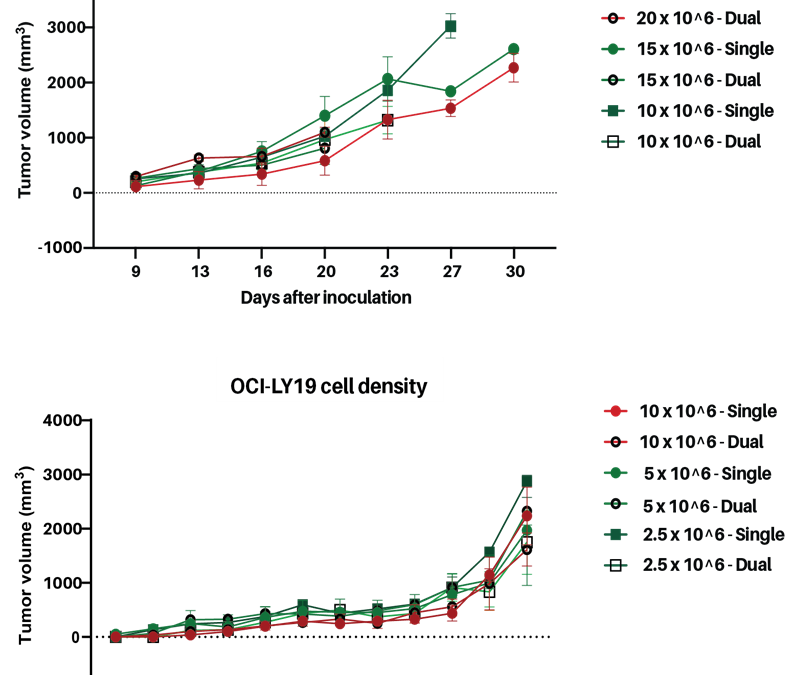
Individuell angepasste CDX-Mausmodelle für Lymphome in der präklinischen Onkologie
In aktuellen Studien haben wir zwei neue Xenotransplantatmodelle (CDX-Modelle) etabliert und validiert, die aus den Zelllinien OCI-Ly19 (diffuses großzelliges B-Zell-Lymphom, DLBCL) und REC-1 (Mantelzell-Lymphom) gewonnen wurden. Diese Modelle wurden im Rahmen einer strategischen...

Multiplex-Profiling von Zytokinen und Immunzellen in der immunonkologischen Forschung
Die Meso-Scale Discovery (MSD)-Plattform ist ein hochempfindliches Multiplex-Analysesystem zur Erstellung von Zytokinprofilen, mit dem Sie mehrere Zielzytokine, Chemokine, Antikörper und Wachstumsfaktoren aus winzigen Probenvolumina (bereits ab 1 µl) gleichzeitig quantifizieren können. Durch...

PDX-Modelle für Bauchspeicheldrüsenkrebs
Der vergangene Monat, der November, war der Monat der Aufklärung über Bauchspeicheldrüsenkrebs – eine Zeit, in der die Herausforderungen im Zusammenhang mit einer der aggressivsten und tödlichsten Krebsarten im Mittelpunkt stehen. Bauchspeicheldrüsenkrebs macht etwa 3 % aller in Europa diagnostizierten Krebserkrankungen aus, wobei Bauchspeicheldrüsenkrebs...

Einblick in die wichtigsten In-vitro-Dienstleistungen von InnoSer im Bereich der Onkologie: PD-1/PD-L1-Blockade-Assay
Immun-Checkpoint-Blockade in der onkologischen Wirkstoffforschung In den letzten Jahren hat sich die Immun-Checkpoint-Blockade als bahnbrechende therapeutische Strategie in der Immunonkologie etabliert. Der Programmierte-Zelltod-1-Rezeptor (PD-1) und sein Ligand, der Programmierte-Zelltod-Ligand 1 (PD-L1)...
AAALAC-Akkreditierung
InnoSer hat die AAALAC-Akkreditierung erhalten und damit sein Engagement für einen verantwortungsvollen Umgang mit Tieren unter Beweis gestellt. AAALAC International ist eine gemeinnützige Organisation, die sich durch freiwillige Akkreditierungs- und Bewertungsprogramme für den artgerechten Umgang mit Tieren in der Wissenschaft einsetzt. Die Einrichtungen von InnoSer in den Niederlanden und Belgien sind seit 2016 bzw. 2020 AAALAC-akkreditiert. Weitere Informationen zum AAALAC-Akkreditierungsprogramm finden Sie hier.

Tierschutz
Die 3Rs wirken sich auf alle Bereiche aus, von politischen und regulatorischen Veränderungen bis hin zur Entwicklung und Einführung neuer Technologien und Ansätze. Aus diesem Grund engagiert sich InnoSer kontinuierlich für diese Prozesse und überwacht sie. Die von uns umgesetzten Maßnahmen maximieren unsere Fähigkeit, den Einsatz von Tieren zu ersetzen, zu reduzieren und zu verfeinern, und unterstützen unser Bekenntnis zu diesen Grundsätzen in der Forschung und der Arzneimittelentwicklung.
info@innoserlaboratories.com