
Oncology CRO services – Patient-derived Organoid High Throughput Phenotypic Screening Services
Rapidly identify your lead compounds using InnoSer’s organoid high-throughput phenotypic screening services and progress to the next stage of your research with confidence
Due to capacity InnoSer and Drug Vision can no longer recieve requests regarding organoid screening services.
InnoSer’s Organoid High-Throughput Phenotypic Screening Services
Organoid high-throughput phenotypic screening services consist of an advanced technology enabling the testing of multiple of lead drug candidates on patient-derived organoid cancer models using robotics and live-cell imaging. Although commonly performed in the hit-to-lead stages of drug development, organoid high-throughput screening can be likewise performed during the lead optimization stages, providing you with more in-depth insights into initial drug efficacy, mechanism-of-action, resistance mechanisms and patient-specific responses.
InnoSer’s organoid high-throughput phenotyping screening services accelerate your lead selection and optimization process by providing you with accurate, reproducible data using patient-derived organoids. Using automated, label-free screening powered by University of Antwerp’s screening platform DrugVision.ai and advanced image and data analytics of University of Antwerp’s spin-off Orbits Oncology, we deliver fast insights into drug efficacy, mechanism of action, and synergy. This enables you to screen multiple lead compounds and make informed decisions faster than ever.
✓ Access to patient-derived organoid biobank (detailed information of patient and treatment history, in vitro population doubling rates, HotSpot analyses; mutational burden, RNA seq data)
✓ Obtain high-throughput phenotypic organoid drug response analysis (Powered by DrugVision.ai)
✓ Obtain advanced image & data analytics (Powered by Orbits Oncology)
✓ Leverage centralized study management by InnoSer: seamlessly transition to in vivo models whereby selected drug candidates can be directly tested in PDX models
✓ Identify sub-clonal drug response heterogeneity (i.e., resistant, intermediate and/or sensitive) on a single-organoid resolution to predict treatment response
✓ Accurately and reliably quantify cytostatic and cytotoxic drug effects
✓ Identify synergies between different drugs

Developing new, safe, and efficacious anticancer therapies is an extremely intricate process. As a preclinical oncology contract research organization (CRO), InnoSer partners with you to help you navigate the complexities of this research area. Scientists at InnoSer collaborate with you to develop the most optimal study design to help answer your research questions in the most cost-effective way.
With flexible and fast study start times you can perform your research at an accelerated pace. Accordingly, in combination with InnoSer’s patient-derived xenograft (PDX) models, that can be studied in immunodeficient or humanized mouse models. This approach provides you with seamless access from in vitro to in vivo testing using the same parental tumor samples.
We Help You Unlock the Power of Organoid High-Throughput Screening
| InnoSer | Traditional HTS | |
| Drug Response Metrics | Clear distinction between cytostatic & cytotoxic responses | Based on limited endpoint assays |
| Detection Capabilities | Label-free live cell imaging | Requires fluorescent markers |
| Drug Synergies Detection | ✔️ | – |
| Anzeigen | Advanced, accurate metrics (NOGR) | Basic viability (ATP) readouts |
| End-to-end services | ✔️ | – |
| Lead Times | Screening can be performed immediately | – |
Key Organoid High-Throughput Phenotypic Screening Services
Entdecken Sie die richtigen Werkzeuge für Ihre Forschung.
Entdecken und vergleichen Sie unsere Onkologie-Plattformen, um das ideale Modell für Ihre Studienanforderungen zu finden.

Die Menschen hinter Ihrer Forschung

Céline Erens, PhD, Oncology Study Director
Ein Expertenteam unter der Leitung unserer Studienleiterin für Immunonkologie, Céline Erens, unterstützt Sie bei der Auswahl der richtigen Instrumente und der Ausarbeitung optimaler Studiendesigns. Die Begleitung der präklinischen Prüfung Ihrer Leitverbindungen auf der Grundlage fundierter Fachkenntnisse ist der Schlüssel zur Beschleunigung Ihrer Arzneimittelentwicklung.

Dr. Yanick Fanton, wissenschaftlicher Leiter
Als Chief Science Officer bei InnoSer ist Yanick für alle Kundenstudien bei InnoSer verantwortlich und kümmert sich um die wissenschaftliche und technische Koordination.

Prof. Dr. Deben, University of Antwerp
Prof. Dr. Deben (University of Antwerp) is a leading expert in high-throughput phenotypic drug screening on patient-derived tumor organoids. He heads the UZA/UAntwerp tumor organoid biobank, leads the DrugVision.AI robotic screening platform, and co-founded the UAntwerp spin-off Orbits Oncology.
Mitglieder des Onkologie-Beirats

Prof. Dr. Esther Wolfs
Dr. Wolfs, Mitglied des wissenschaftlichen Beirats von InnoSer, ist eine führende Forscherin auf dem Gebiet der Stammzelltherapie. Derzeit ist sie Professorin an der Universität Hasselt und nutzt Stammzellen in der Krebstherapie sowie als Modell zur Erforschung der Charcot-Marie-Tooth-Krankheit Typ 1A.

Dr. med., Dr. phil. Marije Slingerland
Als Mitglied des wissenschaftlichen Beirats von InnoSer konzentriert sich Dr. Slingerland vom Medizinischen Zentrum der Universität Leiden auf klinische Studien zu Magen-Darm-Krebs und Kopf-Hals-Krebs, insbesondere auf intratumorale Immunparameter.
Häufig gestellte Fragen
Do you have a list of available patient samples for PDO applications?
- Pancreatic cancers
- Gastric cancers
- Liver cancers
- Lung cancers
- Detailed information of patient and treatment history (if applicable)
- In vitro population doubling rates
- HotSpot analyses
- Mutational burden
Does InnoSer offer integrated PDO/PDX services?
Yes, InnoSer offers fully integrated PDO (Patient-Derived Organoid) and PDX (Patient-Derived Xenograft) services to support translational oncology research. By combining in vitro PDO models with in vivo PDX studies, you can gain a comprehensive understanding of tumor biology and drug responses.
Advantages of integrated PDO/PDX services:
- Efficient screening of drug candidates in PDOs before selecting for PDX validation using in vivo mouse models of cancer
- Reduction in animal usage, improving ethical and cost-effectiveness considerations
- Our integrated workflows allows for a seamless transition from in vitro to in vivo models, ensuring that drug responses observed in organoids are further validated in patient-derived xenografts which can be implanted into immunodeficient or humanized mouse models
How does organoid high-throughput phenotypic screening benefit drug discovery?
InnSer’s organoid high-throughput phenotypic screening services accelerate the drug discovery process by enabling researchers to screen hundreds of compounds rapidly and efficiently. By implementing phenotypic screening, we can visualise how these patient-relevant models respond to a given therapy, providing more in-depth insights in its mechanism of action. This approach enhances the identification of high-potential lead compounds by using human-relevant models, improving the likelihood of translation of novel therapeutics to the clinic. Organoids closely replicate key characteristics of their corresponding parent tumors, including:
- Expression of cancer markers
- Morphology similar to primary tumors
- Transcriptomic profiling
- Mutational landscape
- Inter- and intra-patient response heterogeneity
This is because organoids faithfully replicate important characteristics of the corresponding parent tumors, exemplified by the expression of cancer markers, morphology, transcriptomic profiling and mutational landscape similar to primary tumors. Research has shown that organoids can faithfully replicate drug responses, as well as help optimize treatment strategies for patients on individual basis.
Key advantages of including InnoSer’s organoid high-throughput screening services in your drug development journey include:
- Identify lead compounds with higher translational potential
- Obtain insights into sub-clonal responses on single-organoid level
- Predict drug responses with unmatched accuracy
- Optimize personalized treatment strategies
- Uncover mechanism of action (MoA) and/or drug-resistance pathways of your lead compounds
- Identify biomarkers for response for better patient stratification.
- Analyse drug synergies with your lead compounds to discover more effective treatment combinations
How can identifying sub-clonal responses help in the development of targeted treatments?
Sub-clonal responses in cancer refer to the genetic diversity within a tumor, where distinct populations of cells, or sub-clones, exhibit varying characteristics and responses to treatment, contributing to tumor progression and therapy resistance. Therefore, one of critical challenges in treating cancers that show high intra-tumoral heterogeneity – such as pancreatic ductal adenocarcinoma (PDAC) – is understanding how intrinsic sub-clonal heterogeneity affects the drug response heterogeneity.
To guide the development of novel therapeutics, InnoSer’s platform leverages the expertise of DrugVisionAI and Orbits platforms, enabling single-organoid resolution analyses to assess responses across resistant, intermediate, and sensitive subclones, providing critical insights for personalized treatment strategies. As the name suggests, wide-field imaging excels at capturing the entire structure of patient-derived organoids, offering a comprehensive view of tumor responses to therapeutics.
Indeed, a study performed by DrugVisionAI”s team has shown that a combination of normalized drug screening metric (NDR) with the dynamic quantification of single organoid responses (Orbits) can detect patient-specific and intra-tumoral sub-clonal sensitivities to different standard-of-care therapies, correlating to the matched clinical patient response to therapy. Leveraging the automated high-throughput single-organoid screening process together with Orbits’ AI workflows will allow you to evaluate the efficacy of novel therapeutics on multiple subclones but can also help you evaluate pro-invasive properties of tumoroid sub-clones.
What is the advantage of using label-free segmentation systems in high-throughput organoid drug screening?
Current high-throughput organoid drug screening systems rely on gold-standard measurements that leverage fluorescent labels to track biological processes during live cell imaging. Fluorescent labels, used to track cells, cellular structures and biological processes during live-cell imaging, are known to affect basal cellular activity via inducing oxidative stress through the process of photoxicity. Therefore, these reagents can skew experimental results and confound the effects of drugs in a screening.
InnoSer’s platform for high-throughput organoid screening leverages label-free image analyses using AI image segmentation techniques developed by Orbits. Indeed, a study by Orbits’ team (Deben et al., 2022) has shown that the imaging-based method monitors patient-derived organoids with high accuracy and can even distinguish between cytostatic and cytotoxic responses.
How does InnoSer’s platform help me distinguish between the cytotoxic and cytostatic effects of my lead compounds?
Distinguishing between cytotoxic (cell-killing) and cytostatic (growth-inhibiting) effects of your lead compound is the key to help you understand your lead compounds’ mechanism of action (MoA), optimize treatment strategies, minimize side effects, and develop personalized therapies to effectively manage tumor growth and resistance. In high throughput organoid screening, traditionally used so-called “bulk” assays that rely on quantification of ATP in a cell suspension fail to capture the intra-tumoral heterogeneity and the drug response heterogeneity that impacts drug efficacy, MoA and resistance.
InnoSer’s platform leverages the methodologies developed by DrugVisionAi and Orbits’ to accuarately measure both cytostatic and cytotoxic effects by combining wide-field imaging with a novel organoid growth rate metric (normalized organoid growth rate: NOGR). This approach was demonstrated in studies such as Deben et al., 2024, further validating the reliability of the screening methods.
How can I identify drug synergies with InnoSer’s high-throughput organoid screening platform?
With the ability to test multiple drugs simultaneously, InnoSer’s high-throughput organoid drug screening platform can help you identify synergistic drug combinations that may enhance treatment efficacy. This helps accelerate the discovery of novel therapies combination, whilst simultaneously leveraging the power of drug repurposing, that could be more effective in treating different types of cancers.
Leveraging the power of label-free live-cell imaging and automated AI cell segmentation analyses, InnoSer implements DrugVision.AI and Orbits’ workflows to enable identifications of synergistic drug combinations. In an example study performed by Deben et al., (2024), a synergy between Auranofin, a drug repurposing candidate for cancer, and various anticancer agents in normal lung organoids and lung and pancreatic cancer organoids was shown.
What is the normalized organoid growth rate (NOGR) metric?
NOGR (Normalized Organoid Growth Rate) is a drug response metric used in InnoSer’s high-throughput organoid screening studies. NOGR was developed to better capture the complex reactions of organoids to treatments, offering a more accurate reflection of drug efficacy compared to traditional measures like relative viability (RV). Unlike RV, which can be influenced by variations in cell seeding density and cannot differentiate between cytostatic (growth-inhibiting) and cytotoxic (cell-killing) effects, NOGR takes into account dynamic changes in growth rate, providing a more biologically relevant measure of drug response. Similarly, traditional metrics like Normalized Growth Rate Inhibition (GR) and Normalized Drug Response (NDR) have been used to assess organoid responses to anticancer treatments but face limitations in accurately quantifying cytostatic and cytotoxic effects across varying growth rates.
By using live-cell imaging capabilities of DrugVisionAi combined with Orbit’s automated AI segmenting workflow analyses, NOGR overcomes the limitations of other methods, including the sensitivity to cell division rates, to offer a more consistent and reliable metric for assessing drug sensitivity and resistance in patient-derived organoid models.
This is thanks to the label-free image analysis workflows that allow a precise segmentation of organoids to track their growth rates over time. To learn more about how NOGR was developed in detail, view paper by Deben et al., (2024).
Entdecken Sie weitere verwandte Forschungsmodelle im Bereich der Onkologie


Entdecken Sie die richtigen Werkzeuge für Ihre Forschung.
Entdecken und vergleichen Sie unsere Onkologie-Plattformen, um das ideale Modell für Ihre Studienanforderungen zu finden.
Bleiben Sie neugierig: Weitere Artikel zum Entdecken
Individuell angepasste CDX-Mausmodelle für Lymphome in der präklinischen Onkologie
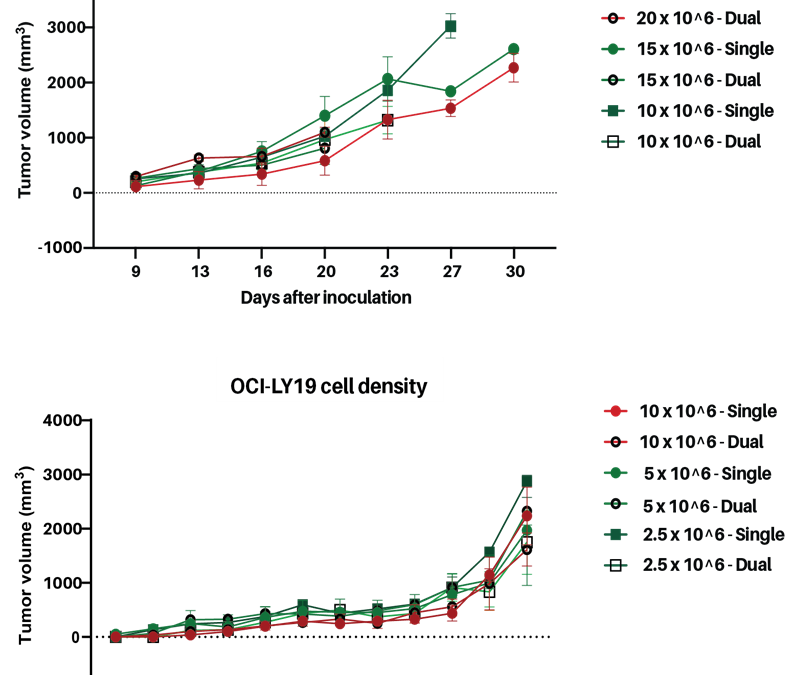
In aktuellen Studien haben wir zwei neue Xenotransplantatmodelle (CDX-Modelle) etabliert und validiert, die aus den Zelllinien OCI-Ly19 (diffuses großzelliges B-Zell-Lymphom, DLBCL) und REC-1 (Mantelzell-Lymphom) gewonnen wurden. Diese Modelle wurden im Rahmen einer strategischen...

Multiplex-Profiling von Zytokinen und Immunzellen in der immunonkologischen Forschung
Die Meso-Scale Discovery (MSD)-Plattform ist ein hochempfindliches Multiplex-Analysesystem zur Erstellung von Zytokinprofilen, mit dem Sie mehrere Zielzytokine, Chemokine, Antikörper und Wachstumsfaktoren aus winzigen Probenvolumina (bereits ab 1 µl) gleichzeitig quantifizieren können. Durch...

PDX-Modelle für Bauchspeicheldrüsenkrebs
Der vergangene Monat, der November, war der Monat der Aufklärung über Bauchspeicheldrüsenkrebs – eine Zeit, in der die Herausforderungen im Zusammenhang mit einer der aggressivsten und tödlichsten Krebsarten im Mittelpunkt stehen. Bauchspeicheldrüsenkrebs macht etwa 3 % aller in Europa diagnostizierten Krebserkrankungen aus, wobei Bauchspeicheldrüsenkrebs...

Einblick in die wichtigsten In-vitro-Dienstleistungen von InnoSer im Bereich der Onkologie: PD-1/PD-L1-Blockade-Assay
Immun-Checkpoint-Blockade in der onkologischen Wirkstoffforschung In den letzten Jahren hat sich die Immun-Checkpoint-Blockade als bahnbrechende therapeutische Strategie in der Immunonkologie etabliert. Der Programmierte-Zelltod-1-Rezeptor (PD-1) und sein Ligand, der Programmierte-Zelltod-Ligand 1 (PD-L1)...
AAALAC-Akkreditierung
InnoSer hat die AAALAC-Akkreditierung erhalten und damit sein Engagement für einen verantwortungsvollen Umgang mit Tieren unter Beweis gestellt. AAALAC International ist eine gemeinnützige Organisation, die sich durch freiwillige Akkreditierungs- und Bewertungsprogramme für den artgerechten Umgang mit Tieren in der Wissenschaft einsetzt. Die Einrichtungen von InnoSer in den Niederlanden und Belgien sind seit 2016 bzw. 2020 AAALAC-akkreditiert. Weitere Informationen zum AAALAC-Akkreditierungsprogramm finden Sie hier.

Tierschutz
Die 3Rs wirken sich auf alle Bereiche aus, von politischen und regulatorischen Veränderungen bis hin zur Entwicklung und Einführung neuer Technologien und Ansätze. Aus diesem Grund engagiert sich InnoSer kontinuierlich für diese Prozesse und überwacht sie. Die von uns umgesetzten Maßnahmen maximieren unsere Fähigkeit, den Einsatz von Tieren zu ersetzen, zu reduzieren und zu verfeinern, und unterstützen unser Bekenntnis zu diesen Grundsätzen in der Forschung und der Arzneimittelentwicklung.
info@innoserlaboratories.com