
Alzheimer’s Disease – Transgenic Tau Mouse Models
Test potential therapeutics for Alzheimer’s disease and other Tauopathies in Transgenic Tau mouse models with Tau deposition and the downstream pathological events
Transgenic Tau Mouse Models Key Characteristics
The histopathological hallmarks of Alzheimer’s disease (AD) are extracellular plaques composed of amyloid beta (Aβ) and intracellular inclusions of the protein Tau (neurofibrillary tangles). Tau is encoded by the microtubule-associated protein tau (MAPT) gene. Tau pathology in AD and other Tauopathies such as frontotemporal dementia (FTD) is strongly associated with neurodegeneration and clinical symptoms.
Transgenic mouse models overexpressing human Tau with disease associated MAPT mutations display abundant tau pathology, neuroinflammation, neurodegeneration, and behavioural impairments; making them ideal models to test therapeutic interventions for AD and other tauopathies. Transgenic Tau mouse models recapitulating the Tau pathology are suitable for testing compounds for AD, but also a range of other Tauopathies (FTD, frontotemporal lobar degeneration, corticobasal degeneration, progressive supranuclear palsy, Pick’s disease). InnoSer additionally offers Tau seeding models using recombinant and/or patient derived seeds or alternatively APP transgenic mice which recapitulate the amyloid beta pathology of Alzheimer’s disease. However, as each model is unique, modelling distinct pathophysiological aspects of Alzheimer’s disease, we recommend you discuss the most appropriate model with our neurology study directors.
✓ APP[V717I]xTau[P301L] double transgenic mouse model.

InnoSer offers expert guidance and a collaborative approach to selecting the best model for your research, as the models we offer present varying degrees of neurofibrillary tangles, neuroinflammation, neurodegeneration, and behavioral deficits.
InnoSer’s neurology expert team possesses relevant experience in working with multiple therapy types, including small molecules, peptides, enzymes, oligonucleotides, gene therapy (viral vectors, e.g., AAVs), and immunotherapies (antibody/vaccine immunotherapies).
Ihre Alzheimer-Forschung beginnt hier.
Entdecken Sie unseren fachkundig zusammengestellten Vergleich der verfügbaren Mausmodelle, um schnellere, datengestützte Entscheidungen zu treffen. Sehen Sie sich einen Beispiel-Zeitplan für die Studie, empfohlene Messparameter sowie Beispieldaten mit Validierungsdatensätzen für die verschiedenen Mausmodelle an.

Transgenic Tau Mouse Models Sample Data

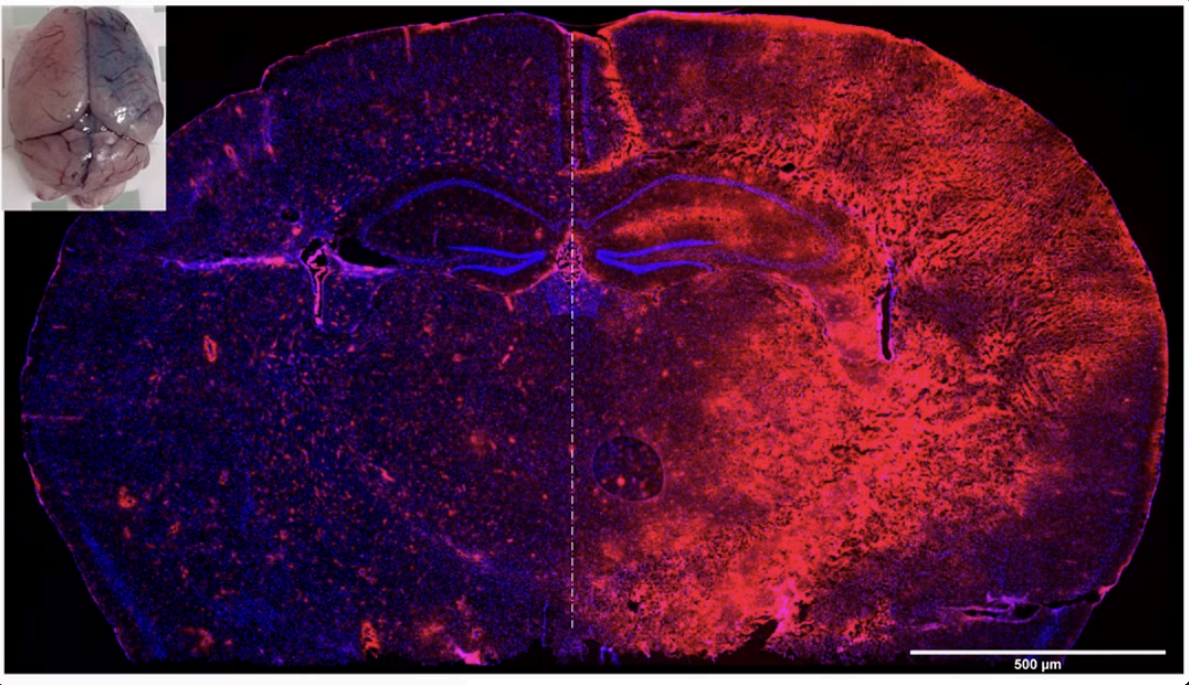
Transgenic P301S (PS19) mice show Tau pathology (AT8; phosphorylated Tau) at 8 months of age

Transgenic P301S (PS19) have astro- and microgliosis at 8 months of age.

Thy1-P301L mice show subtle, but significant changes in gait and footprint size on the Catwalk test indicating fine motor skills deficit at 6 months of age; by 10 months or older, these mice show profound motor function deficits
The CatWalk XT (Noldus IT, The Netherlands) is a gait analysis system for quantitative assessment of gait and locomotion in mice. It is the most sophisticated system for the quantification of a wide range of parameters related to footprints and gait in unforced moving animals.

Thy1 (P301S) mice show a progressive decrease in grip strength from 14 weeks of age onwards.
The Grip Strength test assesses neuromuscular function by measuring the peak force a mouse can apply by grasping a bar connected to a force meter. Five trials with front paws are followed by five trials with front and hind paws combined. The median of these five trials is used as a measure of grip strength. The grip strength test is used in Tau transgenic models to longitudinally follow the build-up of toxic Tau protein in the brain stem and spinal cord.
Transgenic Tau Mouse Models Readouts
Biologische Messgrößen
Test the efficacy of your treatments with the following biological readouts:
- MSD: Plasma, CSF, and brain (pTau, cytokines, NF-L)
- (Digital) histopathology
- Immunohistochemistry (e.g., pTau, neuroinflammation, neurodegeneration)
- Immunofluorescence and FISH
Ist Ihr Modell nicht dabei? Wir helfen Ihnen gerne weiter!
Unsere Experten sind auf maßgeschneiderte Lösungen spezialisiert, die genau auf Ihre individuellen Forschungsanforderungen zugeschnitten sind. Lassen Sie uns gemeinsam besprechen, wie wir Ihr Projekt unterstützen können.
Preclinical Alzheimer’s disease Research with InnoSer

Validated Alzheimer’s disease mouse models
Choosing the right Alzheimer’s disease mouse model determines which pathological endpoints are measurable, which behavioral and biomarker readouts are appropriate, and how your data will be interpreted in a clinical context. Leverage our transgenic amyloid, tau, combined amyloid/tau, and tau seeding models. Read more >>

Translationally relevant Alzheimer’s disease biomarkers
Biomarkers are now central to Alzheimer’s disease clinical trials; generating translationally relevant preclinical readouts has never been more critical. Learn how you can implement clinically relevant biomarkers in one of our validated Alzheimer’s disease models, from plasma Aβ42/40 and/or CSF pan-Tau to the neurodegeneration marker, NfL. Read more >>

Functional behavioral endpoints
Behavioral and functional endpoints are how you demonstrate that your compound is reaching and rescuing cells in the brain regions relevant to Alzheimer’s disease. Assess cognitive and motor functions that have been validated across our Alzheimer’s disease models using CognitionWall™, Morris Water Maze, Rotarod, CatWalk, and ex vivo LTP. Read more >>
Die Menschen hinter Ihrer Forschung

Dr. Sofie Carmans
Leitender Wissenschaftler im Bereich Neurologie

Dr. Thomas Vogels
Leitender Wissenschaftler im Bereich Neurologie
Haben Sie Schwierigkeiten, Ihre Wirkstoffe durch die Blut-Hirn-Schranke zu transportieren?
Erfahren Sie, wie die ultraschallgestützte Durchbrechung der Blut-Hirn-Schranke mit SonoCloud® die Aufnahme im Gehirn verbessern kann – ohne Ihren Wirkstoff zu verändern.
Häufig gestellte Fragen
What is the best tau transgenic mouse model for preclinical research?
While there is no single “best” transgenic tau model that recapitulates the full scope of the disease, the optimal mouse model depends on your therapeutic program needs’ (i.e., mechanism of action of your therapeutic, intended clinical indication), based on which the most suitable transgenic tau mouse model can be recommended.
Indeed, as highlighted in a recent 20-year systematic review of tauopathy mouse models (Langness et al., 2025), mouse model selection should be driven by the specific mechanism of action, therapeutic modality, and stage of disease under investigation. While no single animal model fully recapitulates all aspects of human tauopathy, several models have emerged as widely adopted standards in preclinical research.
Among these, the PS19 mouse model is the most commonly used tau transgenic model in therapeutic evaluations, accounting for approximately 29.6% of all preclinical studies. The rTg4510 mouse model follows with 19.8%, the JNPL3 mouse model represents 11.3%, and the Tau[P301S] mouse model accounts for approximately 8.1% of therapeutic evaluations. The continued popularity of PS19 reflects its historical adoption, robust tau pathology, and extensive legacy dataset.
InnoSer offers the PS19 line as well as well as complementary Tau[P301S] and Tau[P301L] lines, enabling selection based on disease kinetics, reproducibility, and translational alignment.
Which transgenic tau mouse model should I use for my therapeutic program?
The choice of tau transgenic mouse model should align with the specific biological question being addressed. If the goal is rapid screening with aggressive pathology, models such as rTg4510 may be suitable. If reproducibility and controlled disease kinetics are prioritized, the Tau[P301S] mouse model may offer advantages. If comparability with historical literature is critical, the PS19 mouse model remains the most commonly used reference model.
Importantly, given the limitations inherent to any single animal model, preclinical proof-of-concept studies are ideally performed in more than one tau background. Evaluating therapeutic efficacy in both P301S and P301L models, for example, helps distinguish mutation-specific artifacts from broadly translatable tau-modifying effects. A cross-model validation strategy significantly strengthens translational confidence.
Can the prion-like spreading hypothesis of tau be assessed in your transgenic tau mouse models?
The prion-like spreading hypothesis of tau proposes that misfolded tau aggregates act as pathogenic “seeds” that propagate from cell to cell, inducing conformational conversion and aggregation of native tau in recipient neurons. This templated misfolding and trans-synaptic spread of tau pathology is increasingly recognized as a key mechanism underlying disease progression in tauopathies and Alzheimer’s disease.
This mechanism is frequently modelled in transgenic tau mouse models with the goal of establishing more translationally relevant mouse models of tau pathology. Multiple research groups demonstrated prion-like spreading of tau pathology in vivo, whereby pathological tau seeds induce conformational conversion of endogenous tau and accelerate aggregate formation. Transgenic P301S or P301L models, such as the Tau[P301S] mouse model, the Tau[P301L] mouse model, or the PS19 mouse model, provide an optimal genetic background for studying this process due to their expression of human mutant tau.
Learn more about InnoSer’s Tau mouse model and how you can leverage them in your preclinical research by clicking on the respective links above.
Die von InnoSer angebotenen Modelle für die Alzheimer-Krankheit

Transgene Mausmodelle für Amyloid (APP/AB)
InnoSer bietet präklinische Forschungsdienstleistungen mit verschiedenen transgenen Amyloid-Modellen an, die die Plaque-Pathologie der Alzheimer-Krankheit nachbilden.

Transgene Tau-Mausmodelle
InnoSer bietet einzigartige Forschungsdienstleistungen mit verschiedenen transgenen Tau-Modellen an, die die Pathologie der Tau-Neurofibrillenbündel bei Alzheimer nachbilden.

Tau-Seeding und -Spreading bei Mausmodellen
InnoSer nutzt ein Injektionsmodell mit AD-Hirnextrakt und bietet damit einzigartige präklinische Dienstleistungen auf der Grundlage eines translationalen Modells zur Keimbildung und Ausbreitung der Tau-Pathologie.

In-vitro-Neurologie-Assays
Untersuchen Sie Ihre vielversprechendsten Wirkstoffkandidaten mithilfe von InnoSers in-vitro-Neurologie-Assays von InnoSer, um sicher in präklinische in-vivo-Studien überzugehen
Die von InnoSer angebotenen Mausmodelle für die Alzheimer-Krankheit

Transgenes PS19-Mausmodell
Nutzen Sie eines der in der präklinischen Forschung am häufigsten verwendeten Mausmodelle, um die Wirksamkeit Ihres Wirkstoffs gegen die Tau-Pathologie zu bewerten
![APP[V717I]-Mausmodell](https://www.innoserlaboratories.com/wp-content/uploads/2026/05/APPV717I-mouse-model.png)
APP[V717I]-Mausmodell

Tau[P301S]-Mausmodell
Nutzen Sie das von InnoSer entwickelte proprietäre Tau[P301S]-Mausmodell mit reproduzierbarer und aggressiver Tau-Pathologie für schnelle, entscheidungsorientierte präklinische Wirksamkeitsstudien.
![APP[V717I] x PS1[A246E]-Mausmodell](https://www.innoserlaboratories.com/wp-content/uploads/2026/05/APPV717I-x-PS1A246E-mouse-model.png)
APP[V717I] x PS1[A246E]-Mausmodell
Untersuchung der Wirksamkeit von Therapien, die auf die Amyloid-beta-Ablagerung, Neuroinflammation und kognitive Beeinträchtigungen abzielen, in einem transgenen APPxPS1-Modell der früh einsetzenden Amyloidose bei Alzheimer-Patienten
![Tau[P301L]-Mausmodell](https://www.innoserlaboratories.com/wp-content/uploads/2026/05/TauP301L-Mouse-Model.png)
Tau[P301L]-Mausmodell
Nutzen Sie das Tau[P301L]-Mausmodell von InnoSer mit fortschreitender, gut charakterisierter Tau-Pathologie für mechanismusorientierte präklinische Wirksamkeitsstudien.

Transgenes APP x PS1 ARTE10-Mausmodell
Treiben Sie Ihr therapeutisches Programm zur Senkung des Amyloidspiegels voran, indem Sie die weit verbreitete Amyloid-beta-Pathologie des ARTE10-Mausmodells für fundierte präklinische Wirksamkeitsstudien nutzen.
![APP[V717I] x Tau[P301S]-Mausmodell, Spezialisten für klinische Auftragsforschung (CRO) im Bereich der europäischen Neurologie](https://www.innoserlaboratories.com/wp-content/uploads/2026/05/APPV717I-x-TauP301S-mouse-model.png)
APP[V717I] x Tau[P301S]-Mausmodell
EBewertung von Multi-Target-Therapeutika bei InnoSer’s kombinierten APPxTau Krankheitsmodell Modell
Entdecken Sie die neuesten Forschungsergebnisse von InnoSer
Neurodevelopmental disorder mouse models at InnoSer — TSC, Rett & STXBP1
in this month's update, we invite you to explore recent developments in rare neurodevelopmental disorders associated with epilepsy and seizure phenotypes. We highlight emerging therapeutic approaches, discuss the importance of selecting translationally relevant...

Plasma NfL, p-tau217, or Aβ42/40: Which Alzheimer’s disease biomarkers should you include in your preclinical efficacy study?
A practical guide to preclinical Alzheimer’s disease biomarkers panel selection when you’re considering outsourcing to a specialist neurology CRO Biomarkers have transformed Alzheimer's disease clinical trials, enabling diagnosis confirmation for trial eligibility,...

Transgenic Amyloid, Tau, Seeding, or combined Amyloid/Tau pathology mouse models — which is the right one for your drug development program?
A practical guide to model selection when outsourcing your Alzheimer's disease efficacy study to a specialist neurology CRO Choosing the right Alzheimer's disease mouse model is one of the most consequential early decisions in a preclinical drug development program....

Morris Water Maze, Rotarod and beyond: How do you build a comprehensive behavioral test battery when outsourcing your preclinical Alzheimer’s disease efficacy study?
A practical introduction to behavioural test battery selection when outsourcing your Alzheimer's disease efficacy study to a specialist neurology CRO When outsourcing a preclinical Alzheimer's disease efficacy study, behavioral endpoint selection is one of the most...
AAALAC-Akkreditierung
InnoSer hat die AAALAC-Akkreditierung erhalten und damit sein Engagement für einen verantwortungsvollen Umgang mit Tieren unter Beweis gestellt. AAALAC International ist eine gemeinnützige Organisation, die sich durch freiwillige Akkreditierungs- und Bewertungsprogramme für den artgerechten Umgang mit Tieren in der Wissenschaft einsetzt. Die Einrichtungen von InnoSer in den Niederlanden und Belgien sind seit 2016 bzw. 2020 AAALAC-akkreditiert. Weitere Informationen zum AAALAC-Akkreditierungsprogramm finden Sie hier.

Tierschutz
Die 3Rs wirken sich auf alle Bereiche aus, von politischen und regulatorischen Veränderungen bis hin zur Entwicklung und Einführung neuer Technologien und Ansätze. Aus diesem Grund engagiert sich InnoSer kontinuierlich für diese Prozesse und überwacht sie. Die von uns umgesetzten Maßnahmen maximieren unsere Fähigkeit, den Einsatz von Tieren zu ersetzen, zu reduzieren und zu verfeinern, und unterstützen unser Bekenntnis zu diesen Grundsätzen in der Forschung und der Arzneimittelentwicklung.
info@innoserlaboratories.com